The Fearless Era

2008 – 2010

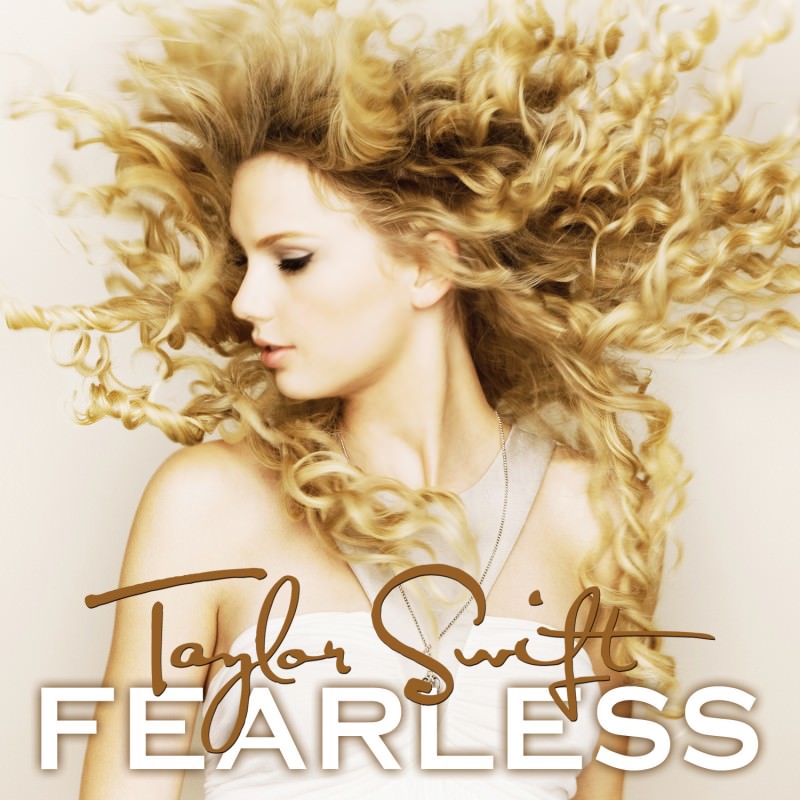
In early 2008, most people didn’t yet have an opinion on Taylor. After all, even though she had already sold millions of copies of her self-titled debut album, her success existed largely within the Nashville scene. She was a teenage country star: dominant on country radio and decorated with country awards. But if you didn’t listen to that kind of music, you could easily remain unaware of her altogether. That separation collapsed with her second album, Fearless. Released in November 2008, it marked the moment Taylor crossed over from genre success to international phenomenon.
Beginning of Era
The Fearless era kicked off on June 6, 2008, when Taylor premiered “Love Story” with an intimate acoustic performance at the CMA Music Festival behind the historic Ryman Auditorium.
The Fearless era closed on a high note on July 10, 2010, with Taylor performing her first-ever stadium show at Gillette Stadium in New England, drawing 55,000 fans. The sold-out finale marked the end of a 15-month, 110-show tour, cementing her rise from country prodigy to superstar.
Fearless (2008)
In 2009 and 2010, the “Fearless Tour” took Taylor around the globe. The show featured theatrical sets and visual elements designed by Taylor herself and a fairy-tale castle illuminated by more than a million lumens of light.
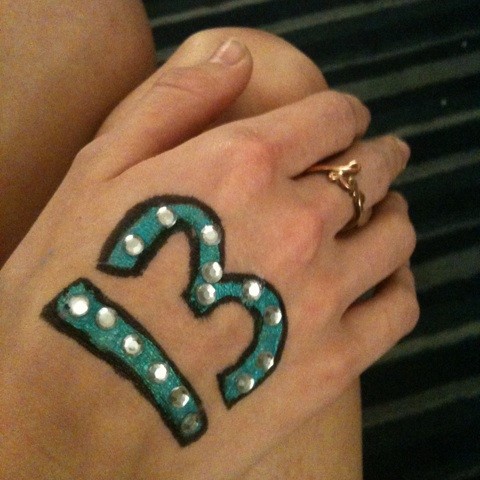
The Fearless era aesthetic was defined by hand hearts exchanged with fans, the number 13 inked on Taylor’s hand, and a visual world rooted in high school romance and first feelings. Whimsical and golden, she viewed love as something magical and worth believing in, capturing the drama and innocence of growing up in real time.
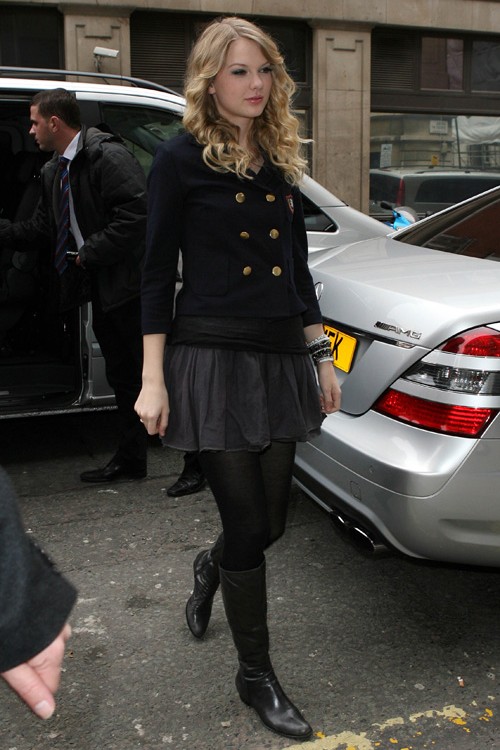
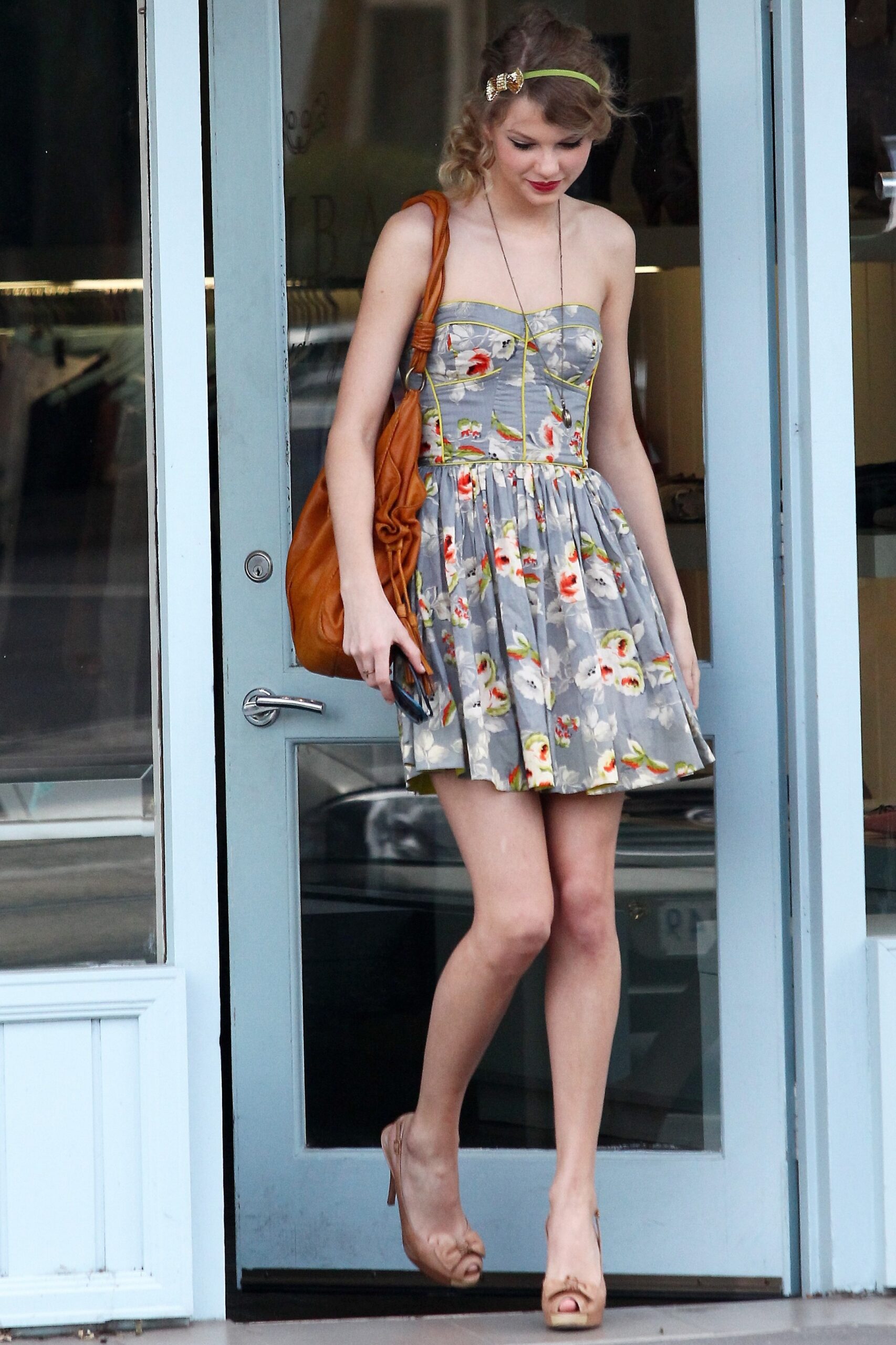
Taylor’s Fearless era style was preppy and schoolgirl-inspired, featuring pleated skirts, knee-high boots, mini dresses, headbands and tons of bracelets. Her soft, blonde curls—envied around the world—became a defining part of her look, instantly recognizable and widely imitated.
Fueled by an unusually strong online presence and an instinctive pop crossover appeal, Taylor became a household name over the course of 2009. Critics and industry figures embraced her songwriting, while millions of teenagers saw their own lives reflected in her lyrics. Massive album sales and her first headlining tour followed, as did a carefully forming public image: blonde curls, diaristic honesty, and an approachable “girl next door” charm that helped position her as America’s Sweetheart. Looking back on that moment in her life in the documentary Miss Americana (2020), Taylor recalled the surreal pace of it all:

«I was in country music, and I was doing a very spectacle-like live show. And I remember thinking, ‘This feels like a dream, this feels like a dream, this feels like a dream!’»

And indeed, many of her biggest dreams materialized quickly. By the end of the decade, Taylor had crossed into the wider entertainment mainstream. She moved comfortably within Hollywood’s orbit, rivaling the era’s biggest Disney stars—then the defining teen celebrities of the late 2000s—and signaling that her reach now extended well beyond the boundaries of country music.

Fearless

Fearless is considered Taylor’s breakthrough record and is the most awarded country album in music history.

Songs on Fearless

Read Taylor’s introduction letter for Fearless, then dive into the detailed stories behind its songs.

Fearless (Taylor's Version)

Fearless (Taylor’s Version) is the first release in Taylor’s historic battle to regain control of her master recordings.

Living With Her Family

In 2008, Taylor still lived at home with her family in Hendersonville, a suburb just outside Nashville, in a spacious house overlooking Old Hickory Lake. It was a beautiful setting, but far from private for a rising star: boats carrying neighbors, locals, and tourists would sometimes pause at the dock to watch the grounds, prompting Taylor to deadpan to Rolling Stone in 2009, “In the summer, people fish off the dock….More people now. Apparently, there are more fish now.” Generally speaking though, living in Tennessee offered its own protective layer:

«Keith and Nicole live there. Tim and Faith live there. We can all go to the grocery store in our sweatpants because the paparazzi have no idea Nashville exists.»

The family was well-off even before Taylor became famous. Both of her parents had careers in finance, making them savvy advisers who weren’t interested in her fortune. Her mother, Andrea usually traveled with her, while her father, Scott, a kind and approachable stockbroker, stayed home with her younger brother Austin, a 16-year-old lacrosse player and academic overachiever. He had moved into a room on the garage level, but Taylor remained in her childhood bedroom—a small space decorated almost entirely in pink and purple. Any trace of her superstar life had been removed, aside from a postcard from Reba McEntire.

But the family’s living room was crowded with bulky glass awards, and hallways were lined with posters of Taylor. A large sitting room was devoted to racks of clothes she had worn on stage or in public, with a sign that read: “Please go through: Keep or give to Goodwill.”
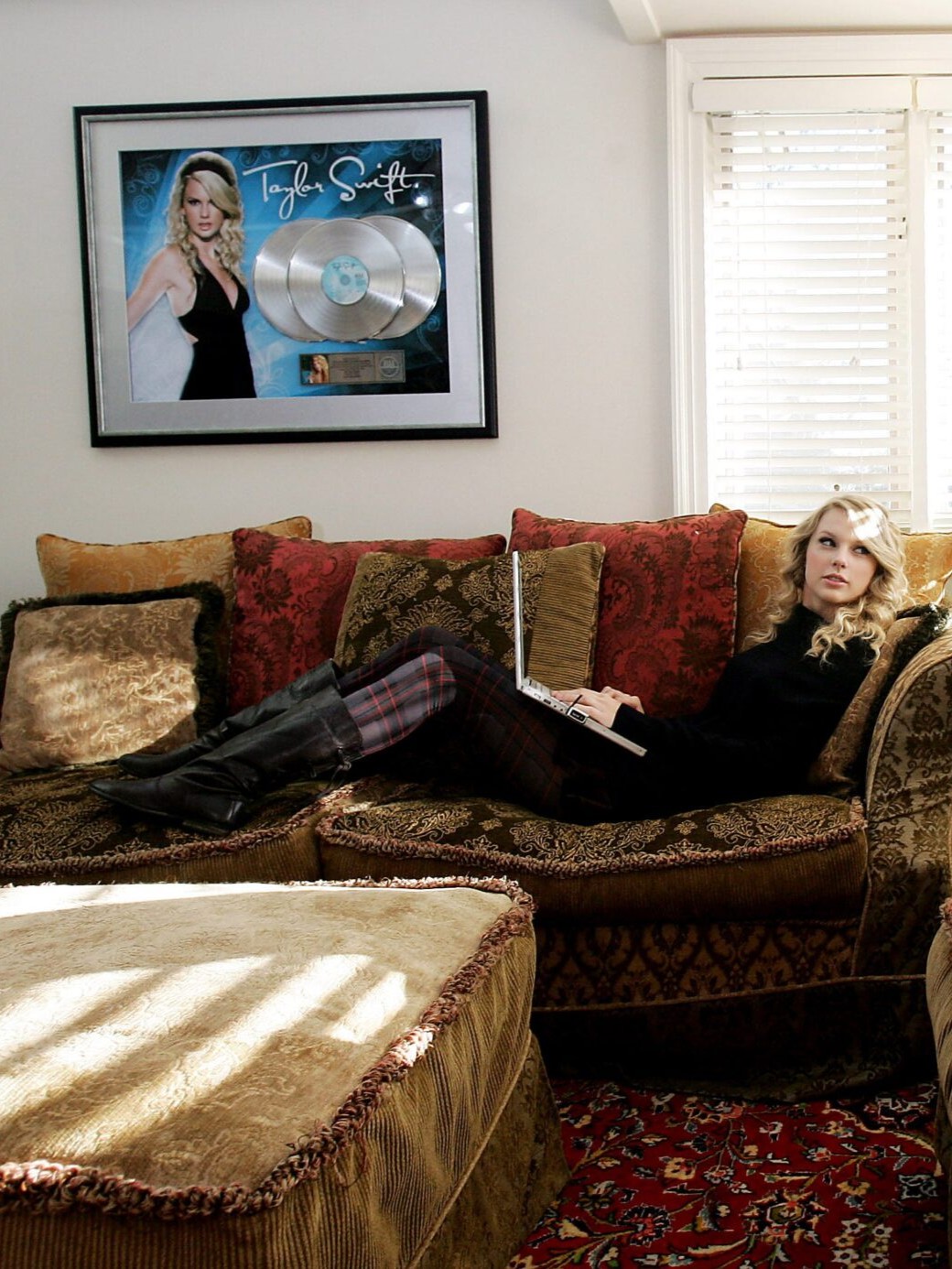
Taylor Swift at home in Hendersonville (Larry McCormack/The Tennessean, 2008)

Timeline of the Fearless Era

Explore some of the defining moments of the Fearless era and dive into the stories behind them in more detail below.
June 6, 2008Beginning of Era
November 11, 2008Album
April 23, 2009Start of Tour
January 31, 2010Award Recognition
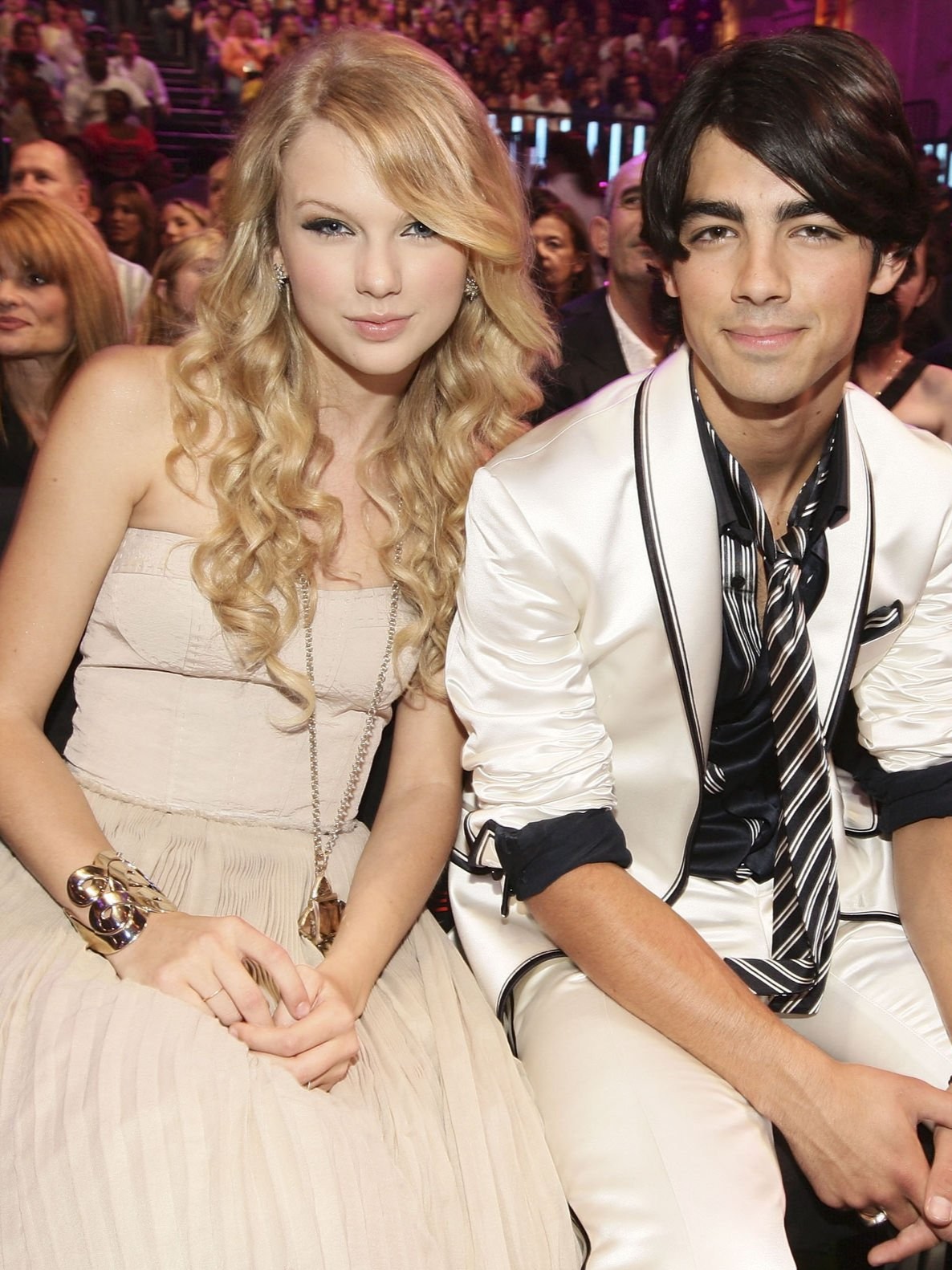
Taylor Swift and Joe Jonas at the 2008 MTV Video Music Awards on September 7, 2008 in Los Angeles (Chris Polk/FilmMagic, 2008)
Taylor Swift and Joe Jonas at the 2008 MTV Video Music Awards (Chris Polk/FilmMagic, 2008)

The First Hollywood Relationship

The first single released from Fearless was “Love Story.” She premiered the Shakespeare-inspired song at the CMA Music Festival over the summer before officially releasing it in mid-September. To call its success impressive would be an understatement. With its undeniable crossover appeal, “Love Story” climbed into the Top 3 of the US Billboard Hot 100 and became an international hit. The scale of the response was something Taylor could not have anticipated. Almost overnight, she became a sought-after performer and interview guest on virtually every talk show imaginable. She even traveled to London (affectionately nicknamed “Fundon”) as her visibility expanded beyond the US.

Yet for an artist who had written one of the decade’s most romantic songs, Taylor admitted she wasn’t sure she had ever truly been in love. She had a boyfriend during her freshman year (Drew Dunlap, a senior hockey player) but there had been little romance in her life since, with one major exception: Joe Jonas. They dated from July to October 2008, after meeting while Taylor performed with the Jonas Brothers during select dates of their “Burnin’ Up Tour.” For months, the relationship remained largely under the radar, with both parties denying they were a couple. But when they were photographed sitting together at the MTV Video Music Awards in September, they effectively confirmed what fans had already suspected. Shortly before the release of Fearless, however, Joe infamously broke up with Taylor in a brief phone call, which directly inspired “Forever & Always,” written and added to the album at the last minute.

Taylor was angry and hurt, and during the promotional run for her album, she made little effort to hide it. Appearing on The Ellen DeGeneres Show, she turned the breakup into a public reckoning, using humor and candor to get even:

«Some day, I'm gonna find somebody really, really, really great, who's right for me. When I find that person that is right for me, he'll be wonderful and when I look at that person, I'm not even gonna be able to remember the boy who broke up with me over the phone in 25 seconds when I was 18.»

Taylor continued to poke fun at the breakup on her Myspace page, posting a vlog in which she held up a Joe Jonas doll. “See, this one even comes with a phone,” she joked to the camera. “So he can break up with other dolls.” Amid the public fallout, the two were still scheduled to appear together on Dick Clark’s New Year’s Rockin’ Eve With Ryan Seacrest in December 2008. As the ball dropped at midnight, Taylor and Joe were spotted standing on opposite ends of the stage alongside Demi Lovato. Ironically, during the broadcast, Taylor performed “Love Story” before transitioning into “Forever & Always.”

Taylor’s Street Style

Taylor’s Fearless era street style was approachable, often drawing on schoolgirl-inspired looks. She favored pleated skirts, cardigans or blazers, and knee-high boots, pairing them with her signature soft curls and occasional headbands for a youthful, effortless vibe. A near-constant “accessory” was a big, colorful 13 drawn on her hand.
Taylor Swift for Fearless (Joseph Anthony Baker, 2008)

The Perfect Girl Next Door

Navigating the media landscape of the late 2000s was rarely kind, especially to young women growing up in public. The culture was fixated on the idea of flawless female role models, and deviation—real or imagined—was met with swift punishment. Taylor’s breakup with Joe Jonas marked her first real encounter with celebrity gossip, and the attention that followed required rapid adjustment. For her, it came with pressure. At just 19 years old, she was branded the “Anti-Britney,” expected to embody restraint, responsibility, and moral clarity at all times for her vast young audience. Looking back in 2022, during her commencement speech at New York University, Taylor articulated the weight of that expectation:

«I became a young adult while being fed the message that if I didn’t make any mistakes, all the children of America would grow up to be perfect angels. However, if I did slip up, the entire earth would fall off its axis and it would be entirely my fault and I would go to pop star jail forever and ever.»

During the promotion for Fearless, Taylor later recalled that nearly every interview seemed to carry a subtle provocation—a suggestion that she would eventually “run off the rails.” She appeared too good to be true. In high school, she had maintained a 4.0 GPA and graduated a year early. She baked cookies in her spare time and was preparing to release her own line of greeting cards, complete with kittens and glitter. She also made a point of saying she had never smoked and had never tried alcohol. Speaking to Elle in 2010, she explained, “If I go to a bar, even if I’m not drinking, who’s to say that a source isn’t going to say that I was doing something I shouldn’t have been doing? So, it’s not only about your own moral compass, but the moral compasses of other people that you don’t know. […] I overthink everything. I overanalyze everything.”

“Self-preservation” was one of Taylor’s favorite phrases, one she applied to her professional ambitions and her personal life. She was acutely aware of how fragile her image as “America’s Sweetheart” could be and how quickly public perception could shift. One of her biggest fears was “making a bunch of bad decisions and embarking on a painful, slow, devastating tailspin.” She was adamant that she would never allow herself to get caught up in scandal or reckless behavior. “When you lose someone’s trust, it’s lost,” she said. “And there are a lot of people out there who are counting on me right now.”

Yet while Taylor became the era’s poster child for innocence, she was far from alone in carrying that expectation. Alongside the Jonas Brothers and a wave of Disney-affiliated stars, including friends like Miley Cyrus, Selena Gomez, Demi Lovato, and the High School Musical cast, she represented a cultural swing away from the “scandalous” TMZ-fueled celebrity narratives that had dominated the early 2000s, shaped by figures such as Paris Hilton and Britney Spears. As her label president put it to Elle, “Taylor’s the perfect person for this media moment. She really is the girl next door. She hasn’t been drunk at a party, hasn’t been in any crazy photographs. In this moment of total madness in the culture, Taylor’s fans know they can count on her. I think parents just go, ‘Oh, thank God my kids love Taylor Swift.’”

The Fearless Tour

Before Fearless, Taylor had never headlined a tour. Just months after its release, however, she was already planning the “Fearless Tour.” In early 2009, she began rehearsals at a studio on the outskirts of Nashville for her first arena—and one stadium—tour, a 52-city run set to launch in April. Demand was overwhelming: a date at Los Angeles’ famous Staples Center sold out in two minutes, while New York’s Madison Square Garden only took 60 seconds.
The “Fearless Tour” kicked off on April 23, 2009, in Evansville, Indiana, at Roberts Stadium. To mark the launch of the sold-out run, Taylor was presented with the key to the city, and the City Council president officially declared April 23, 2009, “Taylor Swift Day.” The fact that her tour opener transformed into a civic celebration meant a great deal to her. In a press release, she wrote:

«Headlining my own tour is a dream come true. This way I can play more music every night than I ever have before. Having written my own songs, they are all stories in my head, and my goal for this tour is to bring those stories to life. My favorite thing when I go to a concert is having lots of changing things to look at, so I've been working really hard to make this show as multi-dimensional as possible.»

The tour ultimately spanned 15 months and 110 performances across three continents, with each show running over 90 minutes. During the same period, Taylor also opened select dates for Keith Urban’s “Escape Together World Tour,” a schedule that left little room for rest. But if fatigue ever set in, it never reached the stage. The production featured multiple costume changes and increasingly theatrical set pieces, early signs of the large-scale visual storytelling that would later become a defining element of her live performances.

The setlist leaned heavily on Fearless and her 2006 self-titled debut, regularly featuring songs such as “Tim McGraw,” “Teardrops On My Guitar,” “You Belong With Me,” and “Love Story.” Taylor carefully structured the show into three distinct sections, including an acoustic segment—an approach that would become a staple of her future tours. By the end of its run, the “Fearless Tour” had grossed more than $63 million. The experience was later documented in the concert film Taylor Swift: Journey to Fearless.

Fearless Tour

The “Fearless Tour” featured a theatrical presentation of high school and fairytale sets, all designed by Taylor herself.

Journey to Fearless

Taylor’s Journey to Fearless documentary offers both on-stage performances and behind-the-scenes content.

13 Hour Meet & Greet

Taylor’s “13 Hour Meet & Greet” is an infamous event which she hosted for free during the 2010 CMA Music Festival.
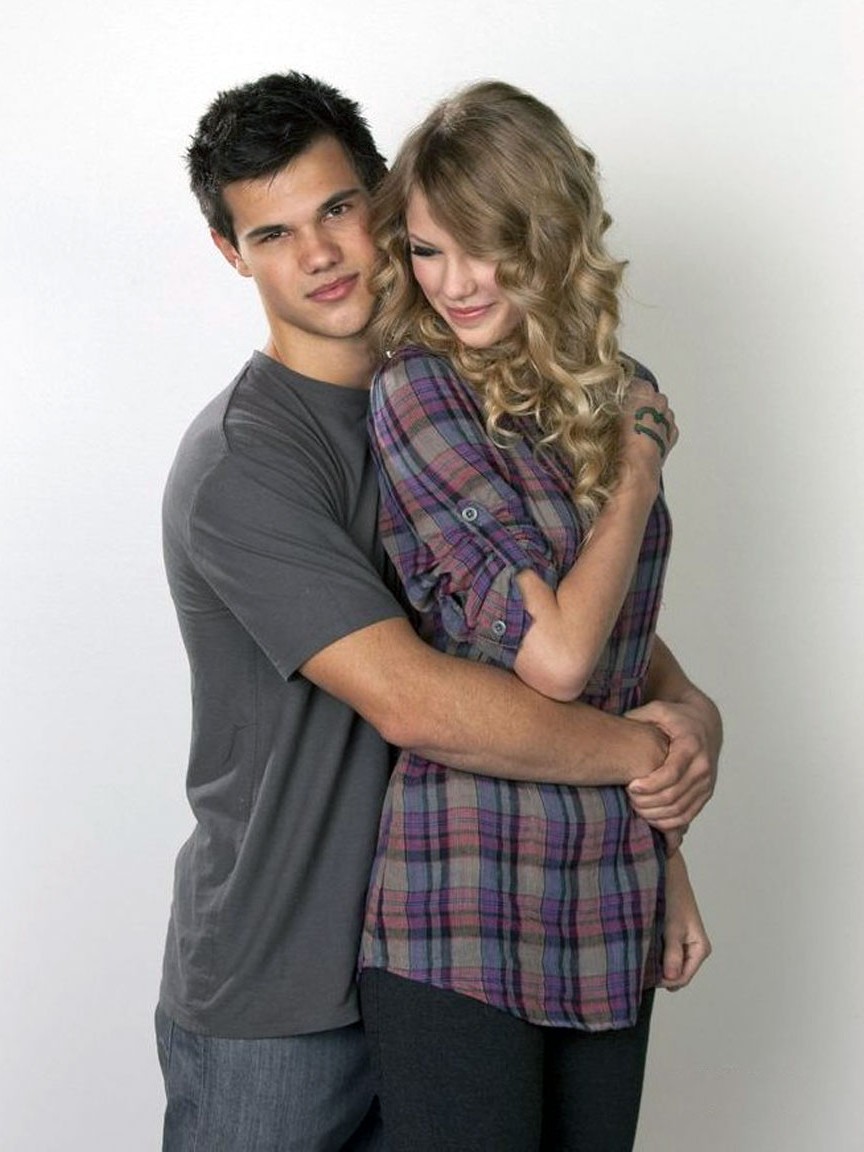
Taylor Swift and Taylor Lautner for Valentine's Day (Warner Bros. Pictures, 2010)

Acting Debut & Taylor Squared

Taylor’s “Good Girl/Songwriter Prodigy” image didn’t just sell millions of records and fill arenas, it also caught the attention of Hollywood produers. A self-described former theater kid, she embraced those opportunities early, making her first forays into acting in 2009. She appeared on an episode of CSI: Crime Scene Investigation, playing a rebellious teenager. That spring, she also made her big-screen debut in Hannah Montana: The Movie, where she appeared in a cameo and performed “Crazier,” a song she had written at just 13 years old. She furhter co-wrote “You’ll Always Find Your Way Back Home” for the film, performed by Miley Cyrus as Hannah Montana, further cementing her crossover appeal within Disney’s cultural orbit.

In July, during breaks from touring, Taylor joined the ensemble cast of Valentine’s Day. She contributed “Today Was A Fairytale” to the film’s soundtrack—a song that became her first No. 1 hit on Canada’s Hot 100 and peaked at No. 2 on the Billboard Hot 100. On set, she met actor and teen sensation Taylor Lautner, then at the height of his Twilight fame. Cast as high school sweethearts, the two soon began spending time together off-camera as well. Dubbed “Taylor Squared” by fans, they fueled dating rumors with a series of public appearances around Los Angeles.

By the end of December, however, sources told People that the relationship had ended. “They became good friends and then went out a few times, but he lives in LA and she lives in Nashville and their busy schedules kept it from becoming more than it was,” a source close to Taylor Lautner said at the time. They were still spotted grabbing lunch together a few months later, and Taylor would go on to write a gentle “apology” to him on her next album. She told Glamour in 2010:

«He's one of my best friends. He's wonderful, and we'll always be close. I'm so thankful for that.»

The two have remained friends ever since; in 2023, Taylor Lautner even appeared in Taylor’s music video for “I Can See You” and joined her on stage during “The Eras Tour” in Kansas City.

Fearless Photoshoot

The visuals for Fearless were photographed by Joseph Anthony Baker, with graphic design handled by Leen Ann Ramey of Ramey Design. While a few images depicted Taylor in a simple bedroom with her diary, mostly in all-white, nearly every song received its own mini-photoshoot.
Kanye West interrupts Taylor Swift at the 2009 MTV Video Music Awards (Jason DeCrow/AP, 2009)

MTV VMA Incident

A pivotal moment in Taylor’s career arrived at the MTV Video Music Awards in September 2009. “When you’re living for the approval of strangers, and that’s where you derive all of your joy and fulfillment, one bad thing can cause everything to crumble,” she later reflected in Miss Americana. That night, she was nominated for “You Belong With Me,” a song that had dominated the spring and summer charts, fueled in part by its charming music video starring her alongside her Hannah Montana co-star Lucas Till.

When it came time to announce the winner for “Best Female Video,” Taylor’s name was called—an outcome that surprised nearly everyone, including Taylor herself. Visibly stunned, she took the stage to accept the Moonman. “I always dreamed about what it would be like to maybe win one of these someday, but I never actually thought it would happen,” she said. “I sing country music, so thank you so much for giving me a chance to win a VMA Award!”

At that moment, Taylor embodied the wholesome heroine of America’s adolescent girls, on the cusp of becoming the year’s biggest-selling artist. But the celebration was abruptly cut short. Rapper Kanye West, casting himself as an arbiter of cultural legitimacy, stormed the stage, grabbed the microphone from Taylor, and declared that Beyoncé was more deserving of the award. Taylor stood frozen. The crowd booed. Beyoncé, seated in the audience, looked visibly mortified. Kanye shrugged, handed the microphone back, and walked off, leaving Taylor too stunned to continue. In Miss Americana, she later described the shock of standing on that stage, unsure of what had just happened:

«It was so echoey in there. At the time, I didn’t know they were booing him—I thought they were booing me. For someone who had built their entire belief system around getting people to clap for you, the whole crowd booing is a pretty formative experience. That was a catalyst for a lot of psychological paths that I went down. And not all of them were...beneficial.»

In the weeks and months that followed, the incident dominated headlines and public discourse. Even President Obama weighed in, calling Kanye a “jackass” for ruining a teenage girl’s moment. The backlash against Kanye was severe, while Taylor found herself pressured to issue public statements. She declined, unwilling to fuel further gossip or prolong the spectacle. Instead, she responded on her own terms. She appeared on Saturday Night Live as both host and musical guest, becoming the first celebrity to write her own monologue. Simply titled “Monologue Song,” it sarcastically skewered her tabloid narrative—from the Joe Jonas breakup to the VMAs incident to “dating the werewolf from Twilight.”

But the moment would follow both artists for more than a decade, solidifying itself as one of the most enduring and consequential pop culture incidents of the 21st century.

Red Carpet Fashion
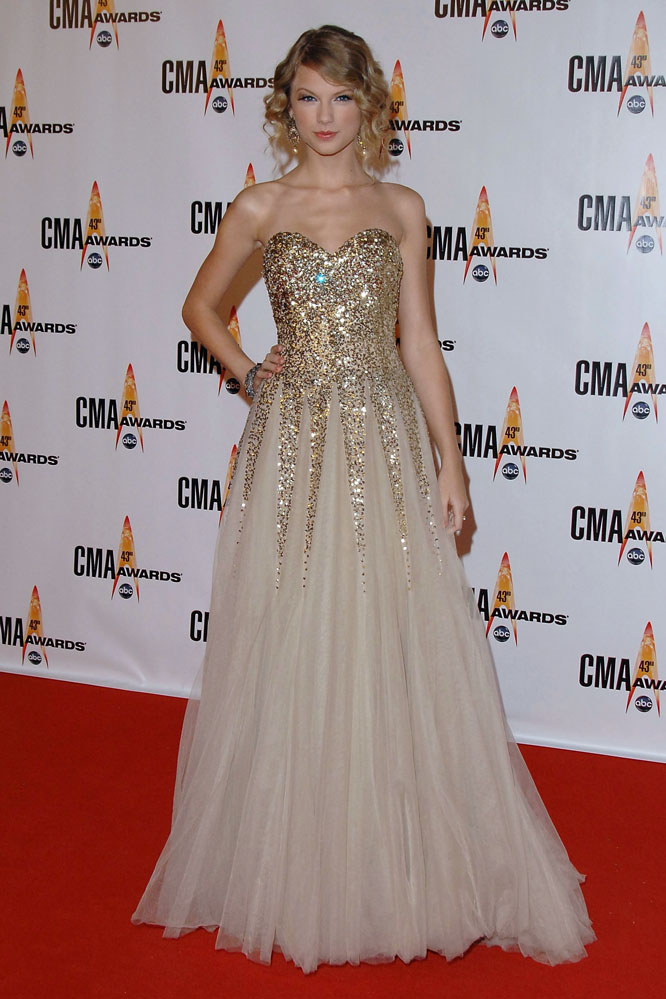
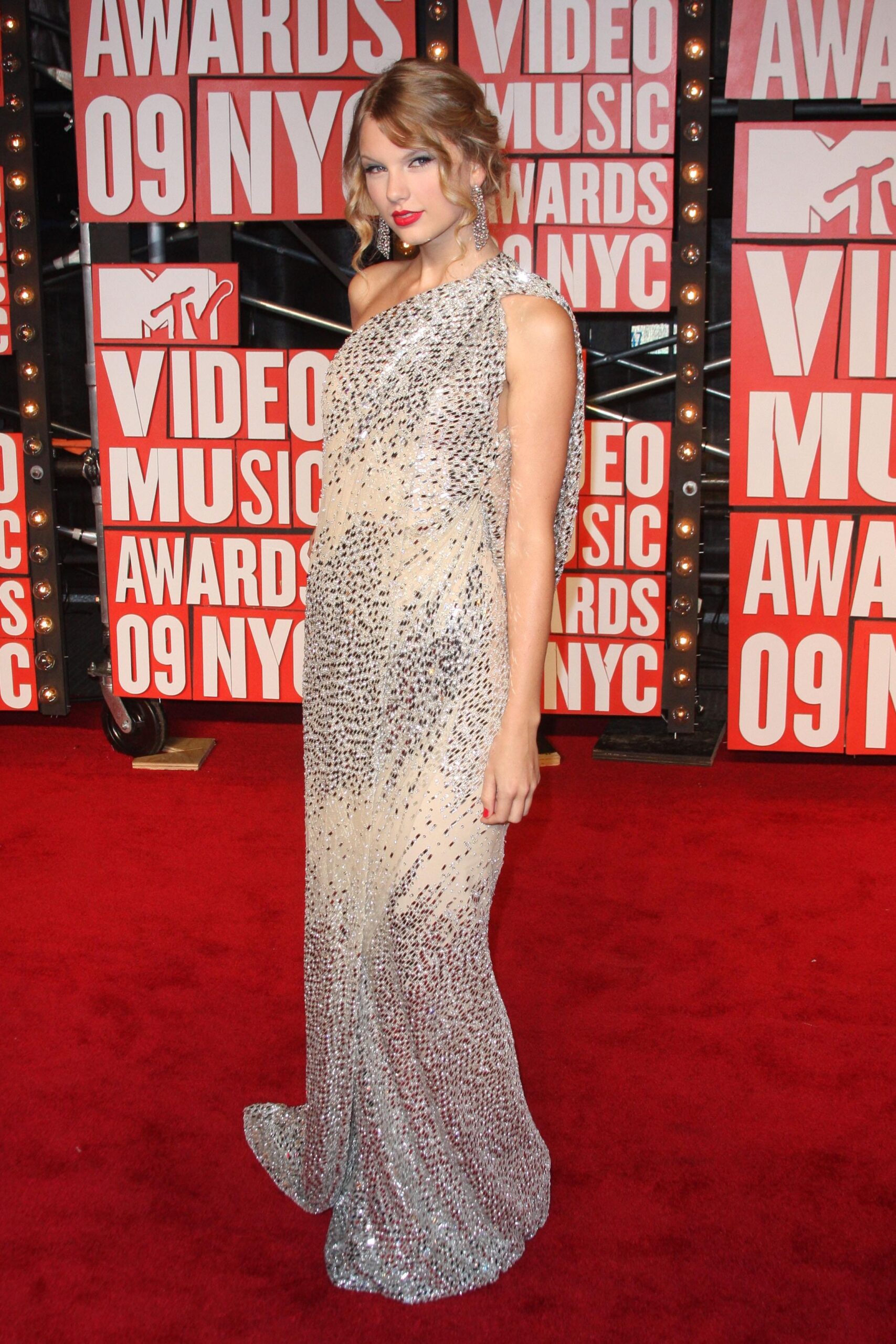
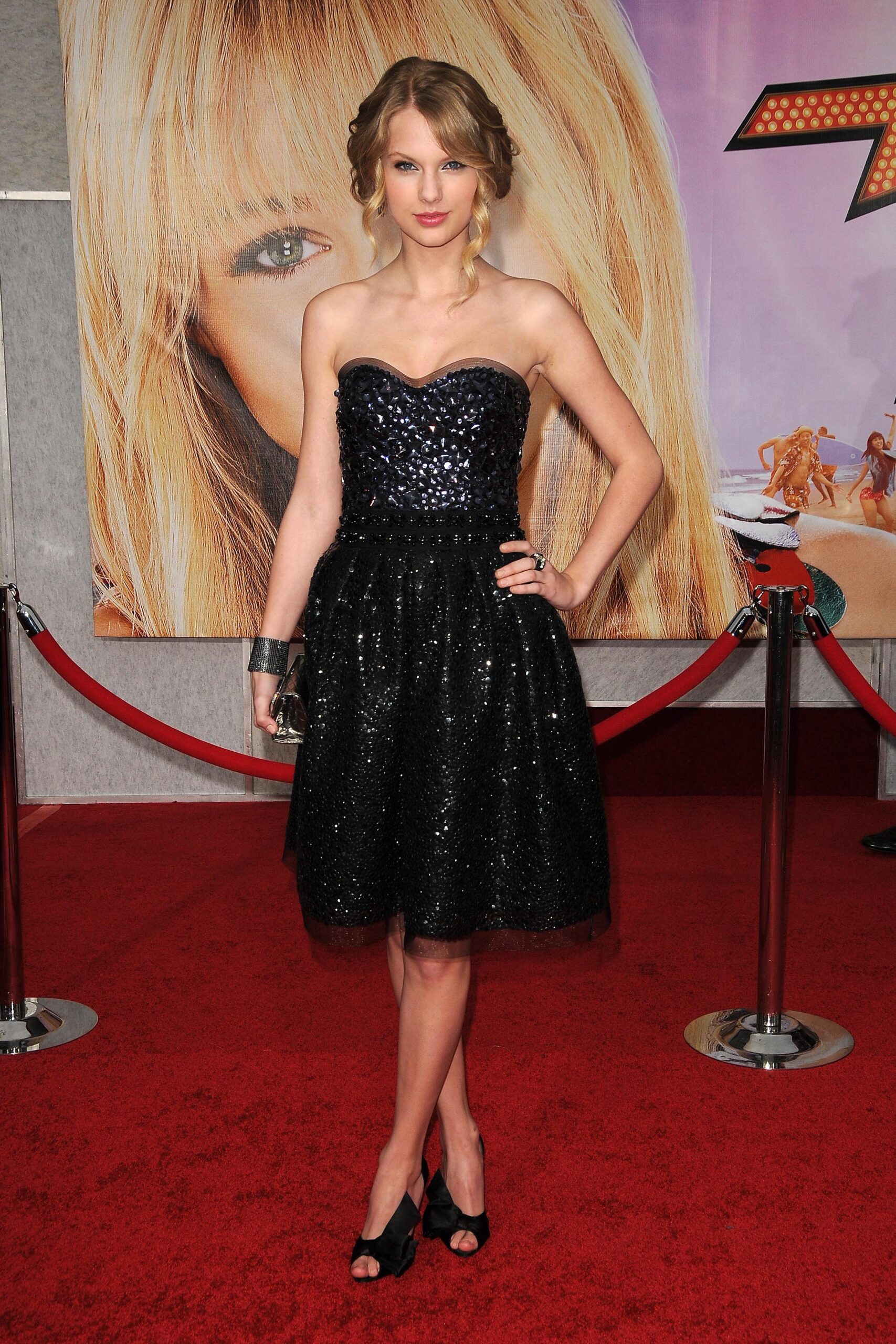
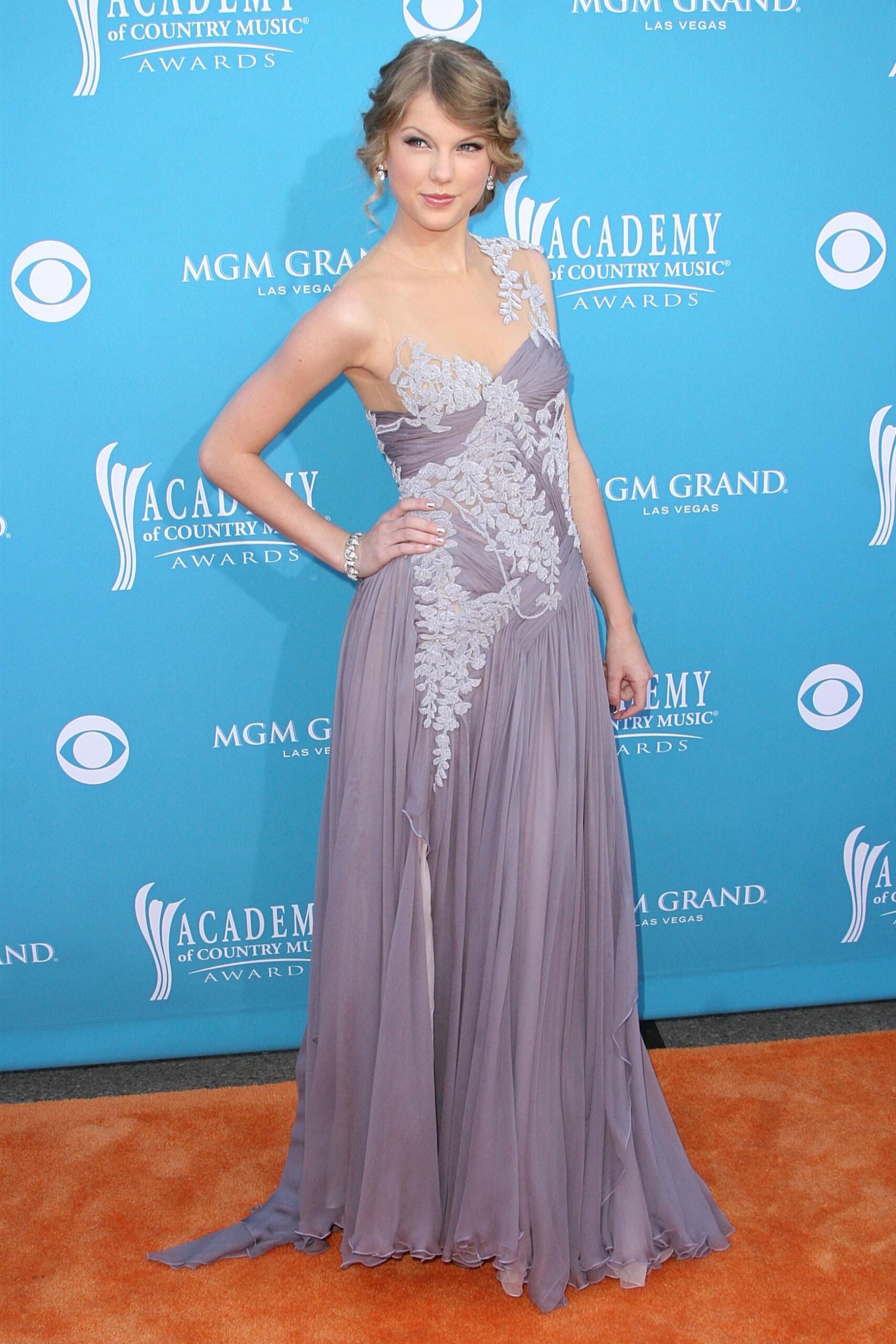
During the Fearless era, Taylor began working with her stylist, Joseph Cassell, and gradually developed a more polished, red-carpet-ready aesthetic. She gravitated toward floor-length gowns in metallic gold and silver, as well as classic neutrals like black and white, and started incorporating couture pieces from designers such as Elie Saab. Her blonde locks were often styled in loose updos, while red lipstick emerged over the course of the era as one of her signature beauty looks.
John Mayer and Taylor Swift in December 2009 (Dimitrios Kambouris/Getty Images, 2009)
Taylor Swift and John Mayer in December 2009 (Dimitrios Kambouris/Getty Images, 2009)

Meeting John Mayer

During this vulnerable period, Taylor met singer-songwriter John Mayer. She was 19; he was 32. Whatever occurred during their brief, much-scrutinized relationship remains private, but the songs Taylor would later write about the experience—released between 2010 and 2022—suggest it was deeply painful. They first connected in March 2009, when Taylor recorded vocals for John’s single “Half of My Heart,” after he publicly praised her music on Twitter, writing that she “would make a killer [Stevie] Nicks in contrast to my [Tom] Petty of a song.” Two months later, John joined Taylor onstage during her “Fearless Tour” at Staples Center, where they performed her ballad “White Horse” and his “Your Body Is a Wonderland” together.

Despite warnings from friends and family, romance rumors began to circulate in December 2009, shortly after Taylor’s split from Taylor Lautner. At the time, John was promoting his new album, which included their collaboration, and frequently complimented Taylor in interviews. When the two performed “Half of My Heart” together at New York City’s Z100 Jingle Ball, the media began framing their interactions as romantic. The following month, they were spotted having dinner together in Nashville with a small group of friends.

Though reports surfaced in February 2010 that they had fallen out, they appeared comfortable together at the Songwriters Hall of Fame ceremony in June, where Taylor was honored with the “Hal David Starlight Award” (presented to young songwriters making a significant and lasting impact on the industry) and John presented her with the award:

«You could put her in a time machine in any era and she would have a hit record. Don't confuse everybody loving one thing as hype. Sometimes that's everyone agreeing that it's fabulous.»

Whether their alleged relationship ended before or after that appearance remains unclear. What is clear is that by October 2010, the dynamic had soured. Taylor’s release of “Dear John” marked a decisive shift in how the relationship was understood publicly. While the full truth of what transpired between them may never be known, its emotional impact lingered. More than a decade later, Taylor revisited the subject on “Would’ve, Could’ve, Should’ve” (2022), a song widely interpreted as reflecting on the lasting scars of a formative age-gap relationship. On the track, she reckons with regret and lost innocence, singing, “You’re a crisis of my faith,” and pleading, “Give me back my girlhood, it was mine first.”

Taylor's Social Media

During the Fearless era, Taylor shared much of her life online, posting almost daily on MySpace and Twitter and uploading vlogs from her life on the road. One particularly popular fan campaign, “A Hug From Taylor Swift,” gained significant traction, allowing her to connect directly with her growing fanbase in a playful, interactive way.
Taylor Swift at the 2010 GRAMMY Awards (Valerie Macon/Getty Images, 2010)

Most Awarded Country Album

All the while, Fearless propelled Taylor to the top of the music world, making her the best-selling artist of 2009 and earning her Billboard’s “Artist of the Year” title. The album would go on to become the most awarded country album in history—a feat that effectively meant it won “Album of the Year” at every major award show it was nominated for, across both country-specific and all-genre categories.

Some of its most notable honors include a record-breaking achievement in November 2009, when the 19-year-old Taylor became the youngest artist ever to be named “Entertainer of the Year” by the Country Music Association. “I will never forget this moment, because in this moment everything that I have ever wanted has just happened to me,” she said through tears during her acceptance speech.

Taylor also collected five American Music Awards, including “Artist of the Year” and “Favorite Country Album,” and at the 52nd Annual GRAMMY Awards in 2010, she took home four awards: “Album of the Year” and “Best Country Album” for Fearless, and “Best Country Song” and “Best Female Country Vocal Performance” for “White Horse.” At just 20 years old, she became the youngest artist ever to win “Album of the Year.” She accepted the award by saying:

«I just hope that you know how much this means to me, that we get to take this back to Nashville! Our families are freaking out in their living rooms! My dad and my little brother are losing their minds in our living room right now. This is for my dad. This is for all those times that you said I could do whatever I wanted in life. And my mom, you're my best friend. When we're 80 years old and we are telling the same stories over and over again to our grandkids and they're so annoyed with us—this is the story we're going to be telling over and over again: in 2010 that we got to win 'Album Of The Year' at the Grammys.»

In retrospect, it’s remarkable that an institution as traditionally conservative as the Recording Academy recognized a 20-year-old Taylor as one of the most important singer-songwriters of her generation. In the broader sweep of her career, Fearless is sometimes overshadowed by her later pop crossover, but at the time, it represented a monumental leap forward. It brought country music into the bedrooms of teen girls who might otherwise have listened to Avril Lavigne or Michelle Branch, while simultaneously showcasing Taylor’s pop sensibilities and the storytelling instincts that would only sharpen in the years to come.

Songs on Fearless

“You have to believe in love stories and prince charmings and happily ever after. That’s why I write these songs. Because I think love is FEARLESS.” Fearless feels like what being a teenage girl feels like. It has the sparkling hope of a young woman thrilled to finally be stepping into adulthood, impatient to live out the romances she has grown up on, all while chiding her crushes for not noticing her.
Taylor Swift for Fearless (Joseph Anthony Baker, 2008)

Capture It, Remember It

Over the course of two years, fame and success had drastically changed Taylor’s everyday life. Back in 2008, she still returned to Nashville frequently, since her career was rooted in the country scene. But by the height of her Fearless era, being part of the A-list meant missing more and more events with friends back home. The only strong bond that remained was with her best friend, Abigail. Reflecting on this period in 2009, Taylor told Glamour, “Sometimes I don’t get invited to things because my friends know it’s going to be a hassle to take me. I’ll find out that a group of my friends went out to dinner, but they wanted it to be a low-key night and not worry about people coming up to the table every other second and asking for autographs, so they didn’t invite me. I can understand that.”

Even so, Taylor wouldn’t trade her dreams coming true for anything. The era concluded on July 10, 2010, on a warm summer evening in New England, with her first-ever stadium show at Gillette Stadium, drawing 55,000 fans. In a time when few artists could sell out venues of that size, achieving it with only her second album was nearly unprecedented. Looking back, she told the Los Angeles Times:

«I get tired. A lot. But I would so much rather be hopping from a plane to a tour bus to go on a stage to doing an interview to doing a talk show to doing this performance to doing that performance to doing an awards show. So when I start to get really physically worn down, I just mentally go back to the place when I would have to get up really early for a test in high school, and I’m like, ‘Hey, this is pretty cool.’»

The Fearless era holds a special place in Taylor’s story. It was the album that made her a star, while also foreshadowing the challenges ahead. One of them being critics who questioned whether she truly wrote her songs—a doubt that frustrated her deeply. “It was all fueled by not feeling like I belonged there,” she said in Miss Americana. “‘I’m only here because I work hard and I’m nice to people.’ Thank God I had that work ethic! Like, ‘I can’t change what’s gonna happen to me, but I can control what I write.’”

So, next on her agenda: proving the doubters wrong, writing her next album entirely on her own, and launching it in October 2010. She was also about to move out. And when time allowed, Taylor would hang out with Abigail.

Frequently Asked Questions

What was significant about Fearless in Taylor Swift’s career?
Fearless marked Taylor’s breakthrough from a promising country artist into a global superstar. It was her second studio album and her first to achieve massive crossover success in pop, setting the stage for her future evolution.
The album blurred the lines between country and mainstream pop, proving that country artists could dominate pop radio and charts. Its success helped redefine what country music could sound like in the 21st century.
Taylor became the youngest artist to win the Grammy for “Album of the Year” with Fearless. The album also won Country Music Association and Academy of Country Music awards for “Album of the Year,” among many other honors, making it the most awarded country album in history.
Her image embraced a whimsical, girl-next-door type quality—sparkly dresses, curly hair, and youthful charm—that matched the album’s themes of teenage love and growing up. The era became iconic for its visual storytelling and signature “13” hand markings.
The “Fearless Tour” was Taylor’s first headlining tour and introduced her to a global audience. It helped cement her reputation as a captivating live performer and grew her fanbase exponentially, also in part due to her nightly surprise meet and greets (called the T-Party).
Taylor Swift Switzerland Logo (2025)
Privacy Overview

This website uses cookies so that we can provide you with the best user experience possible. Cookie information is stored in your browser and performs functions such as recognising you when you return to our website and helping our team to understand which sections of the website you find most interesting and useful.