The Lover Era

2019 – 2020

On December 13, 2019, Taylor turned 30 years old, a milestone that marked nearly half a lifetime spent in the spotlight. Over the course of the 2010s, she had evolved from country superstar to pop titan, and as the decade drew to a close, she stood among the most accomplished musical acts of all time. After leaving her longtime record label Big Machine at the end of 2018, which had signed her when she was just fifteen, she was ready for a clean slate and to focus on the future. But to her devastation, all of her old music was sold to one of her biggest detractors, forcing her to confront her past in the industry. Taylor didn’t hesitate. She began using her influence to fight for artists’ rights and to help build the musical community she had once needed herself.
Beginning of Era
The Lover era began with social media teasers and a 13-day, glitter-filled countdown on Taylor’s website. On April 26, 2019, she released “ME!,” the lead single from her seventh studio album, and revealed the album’s title several months later.
The Covid-19 pandemic cut the Lover era short. In May 2020, Taylor released the recording of her only long-form concert from the previous year, the City of Lover show. Afterward, she was ready to move on to her next project.
Lover (2019)
“Lover Fest” was Taylor’s planned sixth concert tour and her first music festival–style show. It was set to kick off on April 5, 2020, in Atlanta and wrap up on August 1 in Foxborough. However, due to the Covid-19 pandemic, all dates were eventually cancelled.
The Lover era aesthetic was vibrant and romantic, like a bubblegum-pop version of California, filled with butterflies, rainbows, and romantic touches. Pastel colors—pink, blue, and sunset hues—created a light, airy world that perfectly reflected the album’s themes of love, joy, and self-expression.
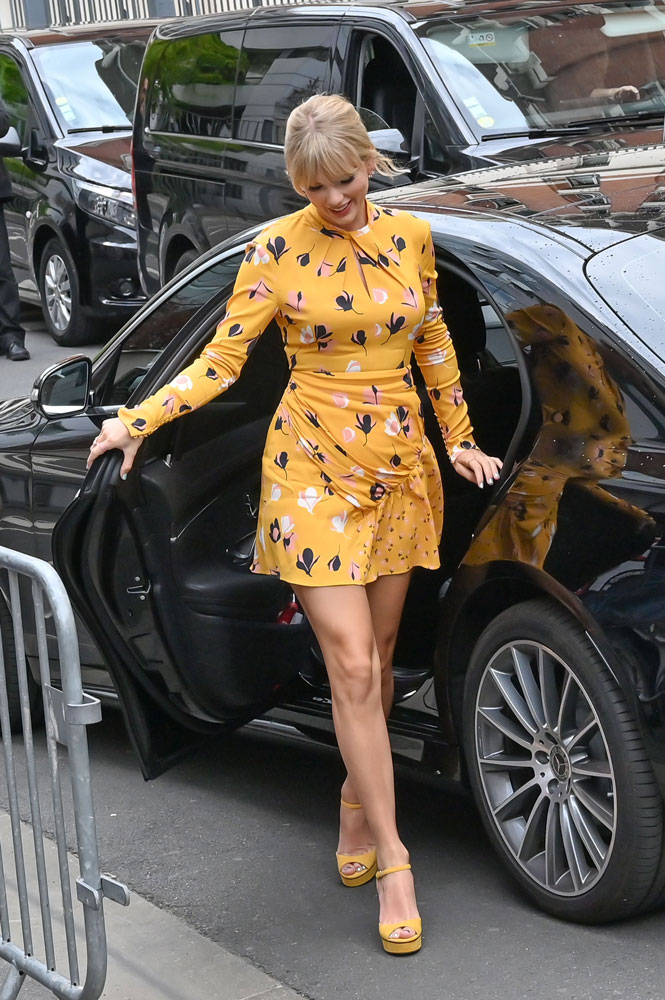
Taylor’s Lover era style was casual, colorful, and fun. One moment she wore sparkly outfits with butterfly heels, the next she stepped out in comfy overalls, jean shorts and a tie-dye shirt or a fringed jacket with sneakers. Pastel-colored menswear, like heart-adorned blazers, was a recurring touch, often finished with streaks of temporary hair dye in her bleach-blond hair.
At the end of 2018, Taylor had moved into a shared home with her boyfriend at the time, Joe Alwyn. By now, she considered London home and had found a comfortable balance between being a global pop star and having a private life. And with a new record deal also came new creative freedom; the chance to explore themes she hadn’t been able to fully touch on before. In this moment of bliss, she found inspiration for new music. Taylor created Lover during and shortly after the “reputation Stadium Tour,” a time when she felt lifted by the love of her fans, her partner, and her close circle of family and friends.

But in the middle of the album campaign, Taylor’s world was turned upside down. Along with everyone else, she learned that the rights to her entire back catalog—her first six studio albums, her life’s work—had been sold by Big Machine founder Scott Borchetta. The buyer was Scooter Braun, one of the industry’s most powerful managers at the time, and someone who had tried to undermine Taylor’s career time and again. She was heartbroken. What had started as a bright, hopeful chapter suddenly became a test of her strength and resilience.

Then, the Covid-19 pandemic cut the Lover era short, making this chapter even more complicated. Its pastel, romantic visuals stand in sharp contrast to everything Taylor was going through behind the scenes.

Lover

Thematically, Lover is Taylor’s love letter to love itself. It is also the first project she owns the master recordings for.

Songs on Lover

Read Taylor’s foreword for Lover, then dive into the detailed stories behind the album’s songs.

Lover (Live From Paris)

Lover (Live From Paris) consists of songs Taylor performed at her City of Lover concert, which was held in Paris.

Stepping into the Daylight

The palm trees appeared in February 2019—seven in total, set against a pastel-blue California sky dotted with stars. It looked like the start of a new era. Or was it? Taylor had long been known for deliberate hint-dropping, and Swifties treated every detail like an archaeological site. Within minutes, they went to work and theories flooded the internet. What did the trees mean? One fan counted roughly 60 stars and predicted a single release on April 26. Another mapped the palms as albums: four for Taylor’s country records, two for pop, and one in the center for what came next. Absurd? Maybe. But were the guesses mostly correct? Yes. Taylor later told Entertainment Weekly:

«I posted that the day that I finished the seventh album. I couldn't expect [my fans] to know that. I figured they'd figure it out later, but a lot of their theories were actually correct. Those Easter eggs were just trying to establish that tone, which I foreshadowed ages ago in a Spotify vertical video for 'Delicate' by painting my nails those [pastel] colors.»

Over the following weeks, the clues multiplied. The dark reputation palette gave way to soft pastels, and as Taylor began posting daily, a countdown theory took hold (“There are five holes in the fence!”). March 2 arrived with no album announcement, but instead Taylor appeared on the covers of Elle UK and Elle US, accompanied by her essay “30 Things I Learned Before Turning 30.”

By mid-March, spring had arrived in Los Angeles, with a rare superbloom drawing thousands of Painted Lady butterflies. Taylor marked the moment on Instagram before attending the iHeartRadio Music Awards that night, wearing a purple sequined romper and stilettos with shimmering wings. Accepting the award for “Tour of the Year” for her “reputation Stadium Tour,” she told fans: “I love your passion! I love your attention to detail. I love how much you care. I love seeing all the things you’re posting online, and I just wanted to let you know when there’s new music, you will be the first to know. I love you so much.”

On April 13, the new aesthetic was fully in place, and Taylor made her move. Her website became a glittery countdown clock to April 26, with posts captioned simply “4.26.” Hours before the countdown ended, Swifties gathered in Nashville at what they thought was a street-art installation by Kelsey Montague commissioned by Taylor—only to erupt in cheers when she actually appeared at the sight. The artwork featured giant, colorful butterfly wings with the word “ME!” between them. That same night, Taylor confirmed on live television during the NFL Draft that “ME!,” her collaboration with Brendon Urie of Panic! At The Disco, would drop at midnight. In the music video, a pastel-pink snake bursts into a kaleidoscope of butterflies. The new era had officially begun.
Taylor Swift posing in front of the Butterfly Mural in Nashville (2019)
Taylor Swift reveals the Butterfly Mural in Nashville (TAS Rights Management, 2019)

Timeline of the Lover Era

Explore some of the defining moments of the Lover era and dive into the stories behind them in more detail below.
April 13, 2019Beginning of Era
June 13, 2019Title Reveal
August 23, 2019Album
May 18, 2020End of Era
Taylor Swift for Lover (2019)
Taylor Swift for Lover (Valheria Rocha, 2019)

Easter Eggs and Opening Up Again

May saw a flurry of Taylor activity, from the release of her new single to dropping hints in multiple interviews about the upcoming album and its title, “hidden” inside the “ME!” music video. Popular fan guesses included the real title, Lover, as well as Kaleidoscope, Home, and Daisy. During the promotional campaign, Easter eggs were seemingly everywhere, teasing moments from Taylor’s past and present—without her saying a word at first.

After the backlash of 2016, Taylor had taken a three-year break from interviews. The mantra of reputation and the subsequent tour had been “No explanations.” But the press blackout was temporary. With Lover, she returned fully into a season of openness, a space she clearly thrived in. At the same time, she had learned to prioritize what mattered most: in interviews, she first and foremost wanted to talk about the new music. As she told The Guardian in August 2019:

«I know the difference between making art and living your life like a reality star. And that even if it’s hard for other people to grasp, my definition is really clear.»

But she was also ready, for the first time, to explain the past three years of her life in depth. The conversations were often far from light. In the portrait published in The Guardian, she said, “When people are in a hate frenzy and they find something to mutually hate together, it bonds them. And anything you say is in an echo chamber of mockery. You can either stand there and let the wave crash into you, and you can try as hard as you can to fight something that’s more powerful and bigger than you. Or you can dive under the water, hold your breath, wait for it to pass and while you’re down there, try to learn something. Why was I in that part of the ocean? […] Why was I trusting people I trusted? Why was I letting people into my life the way I was letting them in? What was I doing that caused this?”

She explained that, over time, she realized she needed to forgive herself for the mistakes she had made and for figuratively falling on her face in front of the world. Or, as she put it more poetically: “You gotta step into the daylight and let it go.”

Lover Street Style
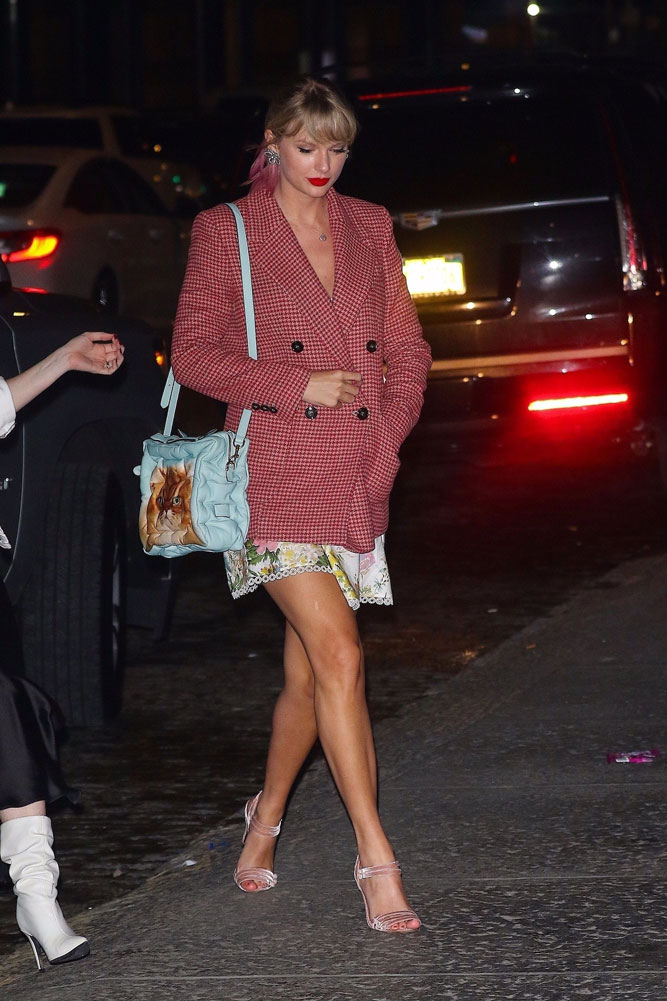
Taylor’s Lover era style was artsy, colorful, and fun. She often went casual in jean shorts, a tie-dye shirt, and sneakers, but pastel-colored menswear and floral dresses were also staples, frequently paired with block heels featuring bold, whimsical details like flowers.
Lover
Taylor Swift for Lover (Valheria Rocha, 2019)

The Equality Act

The album’s second single is the pro-LGBTQ+ “You Need To Calm Down.” Ahead of the release, spurred by a wave of anti-LGBTQ+ bills in Tennessee, Taylor had made a significant donation to the Tennessee Equality Project. The music video, featuring a wide array of LGBTQ+ celebrities, sparked renewed debate over allyship and the corporatization of Pride. So why take such a public stand now? “The things that happen to you in your life are what develop your political opinions,” she told The Guardian. It was her sexual assault trial, coupled with watching the rights of LGBTQ+ friends being eroded, that finally politicized her, Taylor later explained in interviews with Variety and Vogue:

«Rights are being stripped from basically everyone who isn’t a straight white cisgender male. I didn’t realize until recently that I could advocate for a community that I’m not a part of. It’s hard to know how to do that without being so fearful of making a mistake that you just freeze. Because my mistakes are very loud. When I make a mistake, it echoes through the canyons of the world. It’s clickbait, and it’s a part of my life story, and it’s a part of my career arc.»

After learning more about the issue, Taylor launched her own petition in support of the Equality Act, a bill that had passed the House of Representatives and was awaiting a Senate vote at the time. She referenced the legislation in the “You Need To Calm Down” music video, ending it with a call for her followers to sign the petition. It quickly gained over 800,000 signatures—more than double her initial goal of 300,000—and prompted a response from the White House.

Taylor’s Social Media

During the Lover era, Taylor preferred using Instagram to connect with her followers. She shared photos of her three cats, glimpses of her Beverly Hills mansion, palm trees, and summery vacation sunsets—all edited with pastel filters and often sparkling with glitter or rainbow shimmers. At the same time, this was the era Taylor stepped away from Tumblr, where she had previously spent a lot of time engaging with fans.
Taylor Swift (TIME, 2019)
Taylor Swift for TIME (Pari Dukovic, 2019)

The Sale of Her Master Recordings

Taylor’s intended bright and carefree “attitude” of the era came to a sudden halt before Lover was even released. On June 28, 2019, she shared a picture of herself on Instagram wearing sunglasses and a blue floral dress, with a clear sky in the background. “Friday calmness,” she captioned the post. That weekend, she experienced one of the greatest betrayals of her life.

Scott Borchetta, the head of her former label, Big Machine Records, had sold the Big Machine Label Group and its master recordings to Scooter Braun, a manager-mogul, for a reported $300 million—including the masters of all six of Taylor’s first studio albums. In a Tumblr post, Taylor called the sale her “worst case scenario,” noting that Braun had been incessantly “bullying” her throughout her career, often alongside his clients, most notably Kanye West, who had repeatedly tried to derail her. But what stung the most, she said, was that Borchetta had chosen to sell to Braun of all people. Taylor told Rolling Stone:

«When you have a business relationship with someone for 15 years, there are going to be a lot of ups and a lot of downs. But I truly, legitimately thought he looked at me as the daughter he never had. And so even though we had a lot of really bad times and creative differences, I was going to hang my hat on the good stuff. I wanted to be friends with him. I thought I knew what betrayal felt like, but this stuff that happened with him was a redefinition of betrayal for me, just because it felt like it was family. To go from feeling like you’re being looked at as a daughter to this grotesque feeling of 'Oh, I was actually his prized calf that he was fattening up to sell to the slaughterhouse that would pay the most.' […] Here’s the thing: Everyone in my team knew if Scooter Braun brings us something, do not bring it to me. The fact that those two are in business together after the things he said about Scooter Braun—it’s really hard to shock me. And this was utterly shocking. These are two very rich, very powerful men, using $300 million of other people’s money to purchase, like, the most feminine body of work. And then they’re standing in a wood-panel bar doing a tacky photo shoot, raising a glass of scotch to themselves. Because they pulled one over on me and got this done so sneakily that I didn’t even see it coming. And I couldn’t say anything about it.»

But Taylor wasn’t about to go down without a fight. In August, the same week Lover was released, she announced she would rerecord her first six albums the following year—starting in November 2020, as soon as she was contractually able—in order to regain control of her life’s work. “Thankfully, there’s power in writing your music,” she told Billboard. “Every week, we get a dozen synch requests to use ‘Shake It Off‘ in some advertisement or ‘Blank Space‘ in some movie trailer, and we say no to every single one of them. And the reason I’m rerecording my music next year is because I do want my music to live on. I do want it to be in movies, I do want it to be in commercials. But I only want that if I own it.”

Braun and Borchetta tried to block her at every turn. In November 2019, they prevented her from performing her past hits at the American Music Awards and again barred her from including them in her yet-to-be-announced Netflix documentary. But Taylor never wavered. She began hinting that she was looking forward to rerecording: “It’s going to be fun, because it’ll feel like regaining a freedom and taking back what’s mine. When I created [these songs], I didn’t know what they would grow up to be. Going back in and knowing that it meant something to people is actually a really beautiful way to celebrate what the fans have done for my music.”

Lover Photoshoot

The artwork for Lover shows Taylor in front of vibrant backgrounds of soft yellow, pink, and blue, reflecting the romantic themes of the album. The photos were shot in a blooming garden of a Beverly Hills mansion as well as on a city beach. The photographer was Valheria Rocha, a Colombian portrait photographer known for her work in collage art.
Taylor Swift performing at the MTV Video Music Awards in 2019
Taylor Swift at the 2019 MTV Video Music Awards (Dimitrios Kambouris/VMN19/Getty Images for MTV, 2019)

Lover Fest

Another way she planned to celebrate was with her new show, “Lover Fest.” But it wouldn’t follow the same formula as her previous tours. Instead of spending nine months on the road after an album release, Taylor wanted to play four stadium shows in the United States with a hand-picked lineup of artists, and then hit the European festival circuit in the summer of 2020. She shared:

«I wanted to be able to perform in places that I hadn’t performed in as much, and to do things I hadn’t done before, like Glastonbury. I feel like I haven’t done festivals, really, since early in my career—they’re fun and bring people together in a really cool way. But I also wanted to be able to work as much as I can handle right now, with everything that’s going on at home. And I wanted to figure out a way that I could do both those things. This is a year where I have to be there for my family—there’s a lot of question marks throughout the next year, so I wanted to make sure that I could go home.»

She was referring to her mother, the person she’s always been closest to. “Everyone loves their mom; everyone’s got an important mom. But for me, she’s really the guiding force. Almost every decision I make, I talk to her about it first.”

Originally, “Lover Fest” was postponed due to the Covid-19 pandemic. On February 26, 2021, Taylor announced that the tour had been canceled and would not be rescheduled. In a social media post, she wrote: “This is an unprecedented pandemic that has changed everyone’s plans and no one knows what the touring landscape is going to look like in the near future. I’m so disappointed that I won’t be able to see you in person as soon as I wanted to. I miss you terribly and can’t wait ’til we can all safely be at shows together again.”

City of Lover Concert

Taylor released Lover on August 23, 2019. To celebrate the album’s release, she held the City of Lover concert at the Olympia music hall in Paris, in September. There were a total of approximately 2,000 attendees, all of whom had won tickets to the concert through online contests or album purchases.
Taylor Swift for Lover (Valheria Rocha, 2019)

Fighting For Artists' Rights

Since her debut in 2006, Taylor had grown from a country starlet into an all-conquering pop powerhouse. She occupied more space than any other musician on the planet: a sales and—after finally embracing streaming with Lover—streaming phenomenon; a stadium-level performer; an award-winning songwriter for herself and others; and a social media giant with 278 million followers across Instagram, Twitter, and Facebook—enough that Taylor Nation would have ranked as the fourth most populous “country” on Earth, after China, India, and the United States.

Some may have forgotten Taylor’s influence during her quieter years, but the battle over her masters reminded the world that she is one of the strongest advocates for artists’ rights, drawing support from everyone from Halsey to Elizabeth Warren. For years, she had been unafraid to speak up on industry matters, whether about her own career or the thousands of other artists trying to make a living. That combination of superstar power and principled advocacy made her not just the defining artist of the 2010s, but one of the most important figures shaping the future of the music industry as a more artist-centered, songwriter-friendly business. As she told Billboard:

«New artists and producers and writers need work, and they need to be likable and get booked in sessions, and they can’t make noise—but if I can, then I’m going to. I know that it seems like I’m very loud about this but it’s because someone has to be.»

This is where being impossibly famous can be a good thing. Taylor expressed hope that she could make life a little easier for creators in the years ahead—and a belief that her behind-the-scenes efforts would be just as important to her legacy as her biggest hits.

Red Carpet Fashion

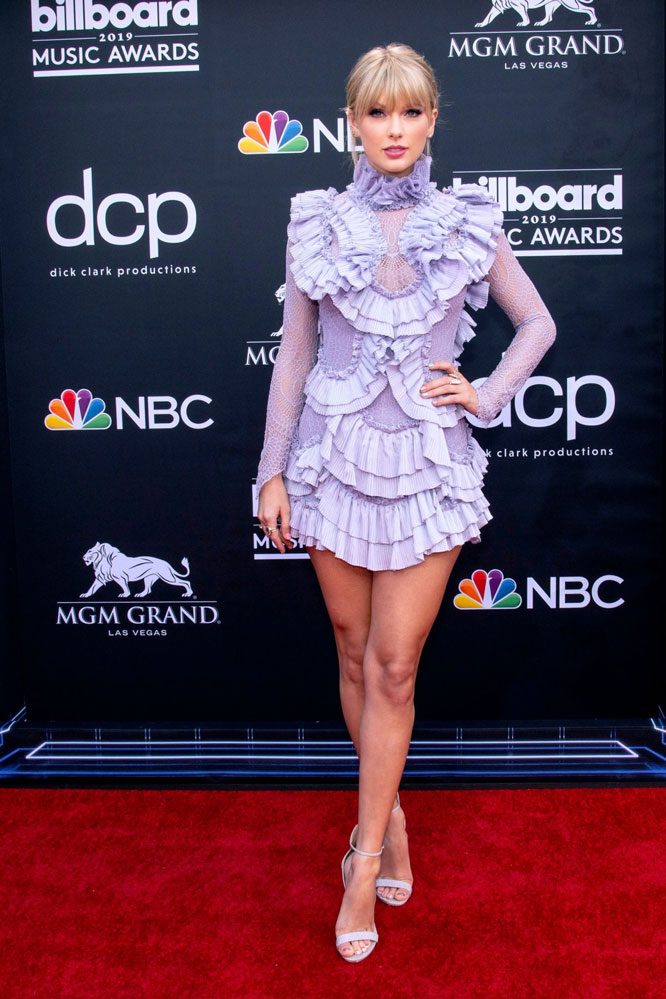
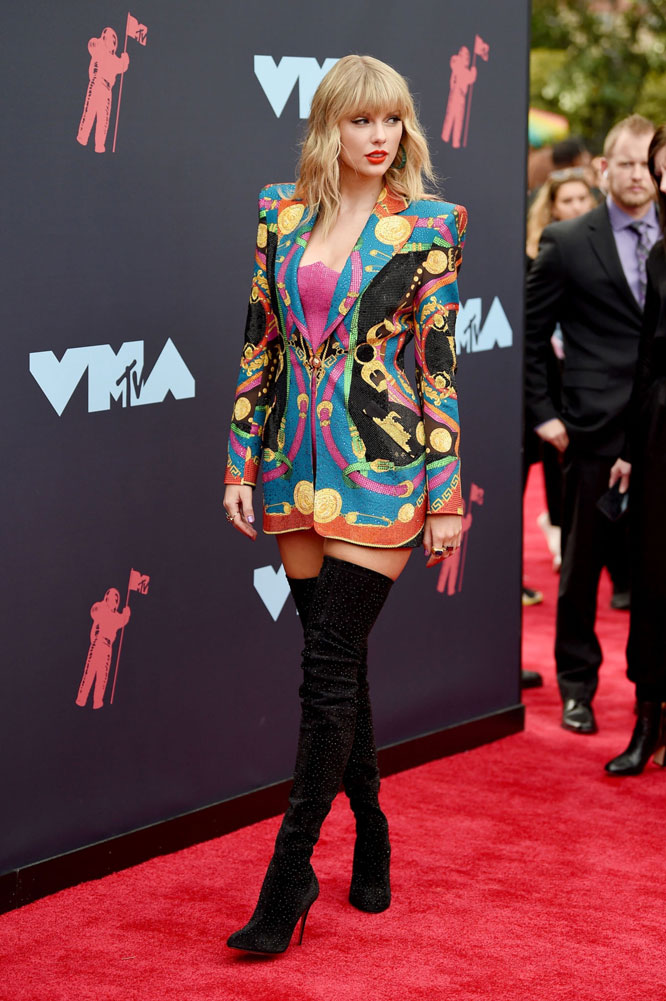
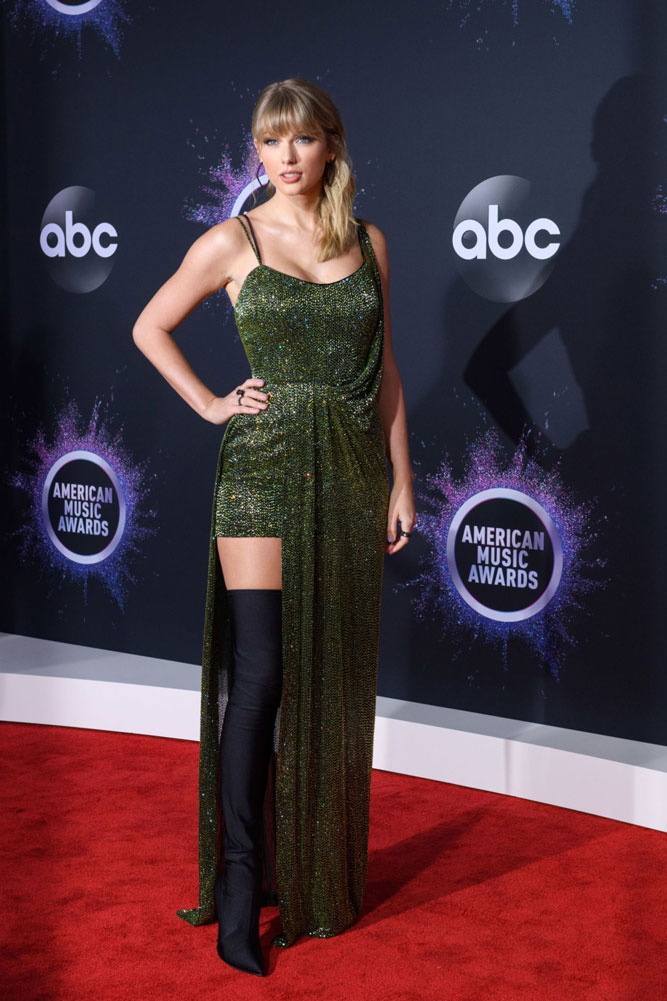
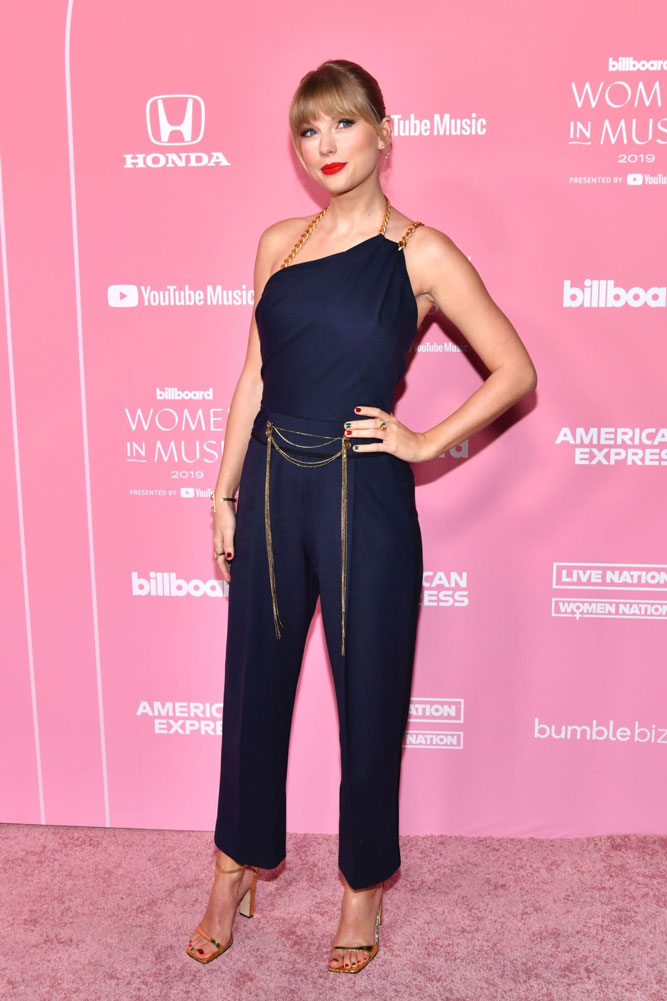
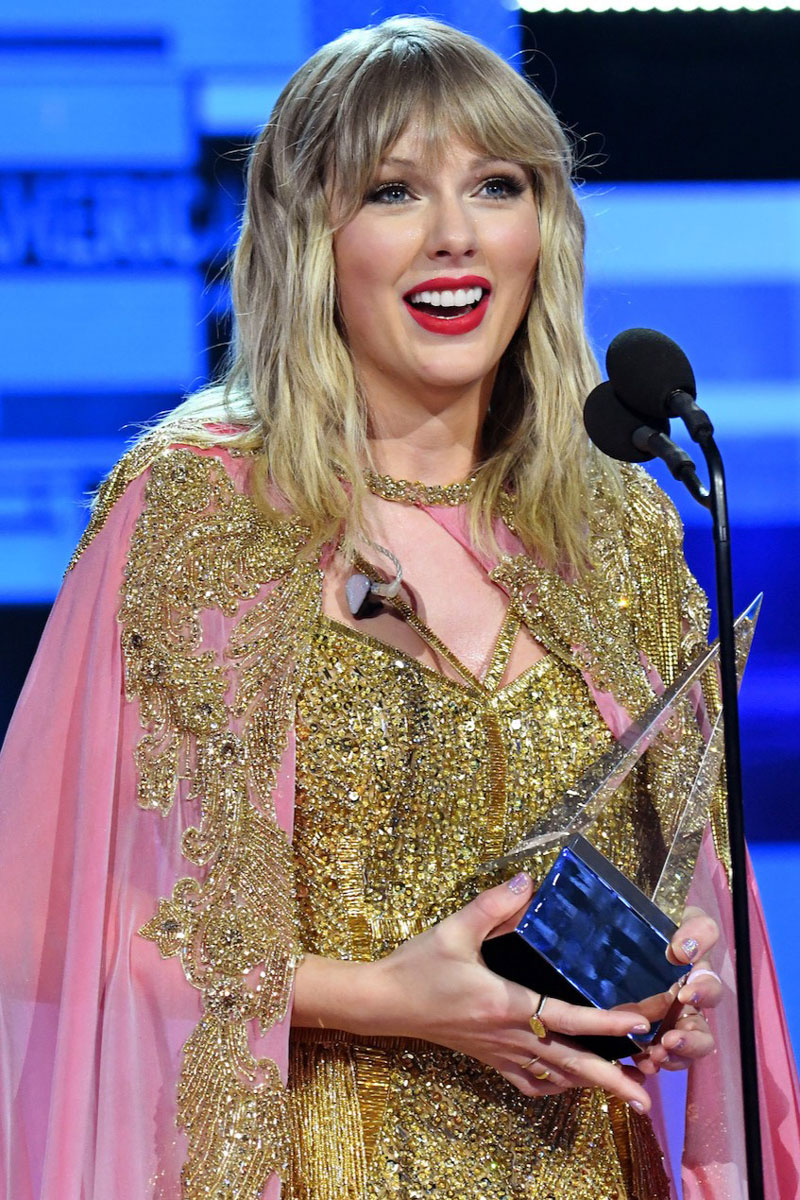
Taylor’s red carpet fashion during the Lover era was primarily colorful. In the beginning stages, she often favored bright sequins and lacy floral details in pastel shades of lilac, dusty rose, and yellow. After losing the rights to her masters, her style shifted toward slightly darker tones and fierce menswear-inspired shapes, like tailored blazers, often paired with strappy sandals or over-the-knee boots.
Taylor Swift accepts the "Artist of the Decade" award at the 2019 American Music Awards (Jeff Kravitz, 2019)

Artist of the Decade

For her relentless work ethic, prolific creative output, and unparalleled cultural and industry impact, the American Music Awards crowned Taylor “Artist of the Decade,” while Billboard named her “Woman of the Decade.” Reflecting on what these honors meant to her, she said, “It means I’ve seen a lot.” Accepting the AMA award, an emotional Taylor told the crowd that the past twelve months had brought “some of the most amazing times” as well as “the hardest things I’ve gone through in my life”:

«This is an award that celebrates a decade of hard work and heart and fun and memories. All any of the artists or anyone in this room wants is to create something that will last, whatever it is in life. All that matters to me is the memories that I’ve had with you, the fans, over the years. Thank you for being the reason why I am on this stage. May it continue.»

At December’s Billboard Women in Music Awards, Taylor delivered a blistering speech, naming names and taking no prisoners as she called out the men who now controlled her six-album Big Machine back catalog. Everyone in the room agreed you could have heard a pin drop as she grew even bolder, digging into the heart of these disputes. Was it intimidating, knowing she might polarize an audience full of the industry’s most powerful figures? “Well, I do sleep well at night knowing that I’m right. And knowing that in 10 years it will have been a good thing that I spoke about artists’ rights to their art.”

Miss Americana

The Miss Americana documentary follows Taylor and her life over the course of several years of her career. It covers a number of events in her life, including the making of her reputation and Lover, her past battle with body dysmorphia and allied eating disorder, her mother’s cancer diagnosis, the toxic internet culture and media scrutiny she faces, and her sexual assault trial, and her decision to go public with her political views, including her LGBTQ+ allyship.
The documentary is a raw and emotionally revealing look at Taylor during a transformational period in her life as she learns to embrace her role not only as a songwriter and performer, but as a woman harnessing the full power of her voice. Upon its release, Taylor shared on her socials:

«I’m excited for you to see it. I want to thank Lana Wilson for her curiosity and for wanting to make this film. It’s wild to be sharing so much of my life because it’s scary to be vulnerable! (understatement of the century)»

The film got a prestige slot as the January 23 opening night gala premiere of the Sundance Film Festival before it reached the world as a day-and-date theatrical release and streaming monster on January 31. The documentary spends much of its opening act juxtaposing the joys of creation with the aggravations of global stardom—before taking a more provocative turn in its last reel to focus more tightly on how and why Taylor became politically outspoken. It’s the story of an earnest young woman with a self-described “good girl” fixation working through her last remaining fears of being shamed as she comes to embrace her claws, and her causes.

Lover Fest

“Lover Fest” was set to be a communal, joyous experience but it was eventually cancelled due to the Covid-19 pandemic.

The Eras Tour

“The Eras Tour” is the highest-grossing concert tour of all time and a tribute to Taylor’s career, including Lover.

Masters Controversy

The sale of Taylor’s masters brought attention to issues of artists’ rights, intellectual property, and industry ethics.

An Era Cut Short

All in all, Taylor’s willingness to stand up for herself and others during the Lover era inspired many. She closed out the 2010s in a very different place than where she began—no longer silent, but confidently using her platform and her art to advocate for change. After years of being expected to stay quiet, she had finally found her voice and wasn’t afraid to use it.

In December 2019, Taylor turned 30—marking the point when more than half her life had been lived in the public eye. This milestone, combined with the painful loss of her master recordings, prompted deep reflection on both her past and future in the music industry. In a rare, unguarded moment captured in the Miss Americana documentary, she admitted:

«This is probably one of my last opportunities as an artist to grasp onto that kind of success. So, as I'm reaching 30, I want to work really hard while society is still tolerating me being successful.»

It seemed Taylor was coming to terms with the fact that her peak pop moment was winding down. Despite her fears, she was determined to enter the new decade with a stronger sense of self-preservation—and a looser grip on control. “You can’t micromanage life, it turns out,” she told The Guardian in the summer of 2019. And she was right. The Lover era was abruptly cut short when the Covid-19 pandemic forced the world into lockdown for most of 2020. A rumored single release for “Cruel Summer” was scrapped, “Lover Fest” was cancelled, and the City of Lover concert along with Lover (Live From Paris) remained the only official live releases from the era.

At first, Taylor felt disappointed and saddened by the sudden end to her carefully laid plans. But in the stillness of lockdown, something shifted. She transformed that disappointment into creative momentum, unlocking a new, unprecedented well of inspiration that would fuel the two most critically acclaimed projects of her career.
Taylor Swift for Lover (Valheria Rocha, 2019)

Frequently Asked Questions

When did the Lover era begin, and what marked the change?
The Lover era began with social media teasers and a 13-day, glitter-filled countdown on Taylor’s website. On April 26, 2019, she released “ME!,” the lead single from her seventh studio album, and revealed the album’s title several months later.
Lover reshaped Taylor’s career by marking her full return to openness and creative freedom after the struggles surrounding her masters. It showcased a brighter, more personal side of her, expanded her political and social voice, and solidified her transition from pop superstar to an artist unafraid to use her platform for both art and advocacy.
The Lover era was defined by a bright, dreamy, and playful aesthetic—think California meets a pastel wonderland. Butterflies, rainbows, sunsets, and soft pastel colors filled the visuals.
The Lover era reinforced Taylor’s status as one of the defining artists of her generation. It capped off a decade of unparalleled output and influence, helping her earn titles like “Artist of the Decade” at the American Music Awards and “Woman of the Decade” from Billboard.
Lover influenced pop culture not just musically, but also culturally and industry-wide, by highlighting the importance of artists’ rights. Through the era, Taylor publicly addressed the loss of her master recordings and took control of her narrative, inspiring conversations about ownership, creative freedom, and the power artists have to protect their work—setting a new standard for how artists can advocate for themselves and others.
Taylor Swift Switzerland Logo (2025)
Privacy Overview

This website uses cookies so that we can provide you with the best user experience possible. Cookie information is stored in your browser and performs functions such as recognising you when you return to our website and helping our team to understand which sections of the website you find most interesting and useful.