Speak Now

October 25, 2010

Speak Now is the third studio album by Taylor, released on October 25, 2010, through Big Machine Records. Written entirely by Taylor as the follow-up to her breakthrough album Fearless (2008), it unfolds as a loose concept record built around the confessions she wished she had made to people she encountered but never addressed. To this day, it remains the best-selling solo-written album in music history.
There is a strong sense of transition running through Speak Now. The record sits at the edge of adolescence and adulthood, and its lyrics reflect that in-between space—where experiences feel larger than life, but understanding them still takes time. The result is an album that feels like both a reaction and a release: it’s sad having to grow up so fast, but it’s inevitable.

Background and Announcement

This article is about the album. For its title track, see Speak Now (song). For the 2023 re-recording, see Speak Now (Taylor’s Version).
The previous two years in Taylor’s life had marked the breakthrough she had always envisioned, catapulting her into international stardom—but they also brought a tidal wave of pressure, pitfalls, and growing pains. The trajectory of teenage fame is often fragile, and in a cruel twist, criticism intensified following her “Album of the Year” win for Fearless at the Grammy Awards in 2010, particularly over her shaky vocal performance that night. Looking back years later in the Speak Now (Taylor’s Version) prologue in 2023, she would reflect on the weight of that moment: “I had these voices in my head telling me that I had the perfect chance and I blew it. I hadn’t been good enough, I had given it all and been found wanting.”

Behind the scenes, the triumph was accompanied by doubt—both internal and external. As she prepared to follow up the most awarded country album in history, scrutiny extended beyond her voice, with questions emerging about whether she was truly the author of her own lyrics. At just 20, Taylor found herself in the position of having to prove that her success was not incidental, but earned through talent and hard work. Rather than retreat, she met that pressure head-on. She committed to refining every aspect of her craft, from her songwriting to her vocal performance, and made a defining decision for her next album: she would write it entirely on her own.

To announce the album, Taylor hosted a livestream from her new Nashville apartment on July 20, 2010, offering fans a glimpse into her home in a setting that felt like a conversation with a friend. From the outset, she made her intent clear—writing Speak Now was a way of revisiting the formative moments of her late teenage years, the instances where she had felt “frozen” in time, and finally giving voice to them. As she later told New York Magazine in October 2010:

«I think I’ve developed, as many people do, this sense of ‘Don’t say the wrong thing, or else people will point at you and laugh. In your personal life, that can lead to being guarded and not making what you feel clear in the moments that you’re feeling it. For me, it’s never really fearing saying what’s on my mind in my music, but sometimes having a problem with it in life. Sometimes you lose the moment.»

Speak Now captures the moment when childhood begins to slip away under the weight of adult realities—an inevitable, if bittersweet, transition.
General Information
ArtistTaylor Swift
Released October 25, 2010
Recorded 2009-2010
Studios Aimeeland (Nashville)
Blackbird (Nashville)
Capitol (Hollywood)
Pain In The Art (Nashville)
Starstruck (Nashville)
Stonehurst (Bowling Green)
Genre Country Pop
Country Rock
Pop Rock
Length 67:29
Label Big Machine Records
Producers Nathan Chapman
Taylor Swift
Album Announcement

Title Significance

The phrase “speak now or forever hold your peace,” spoken during wedding ceremonies just before vows are exchanged, refers to a brief moment in which someone is given the chance to object before a commitment is made. Taylor has described being fascinated by this idea, imagining it as a rare opportunity to finally say what has long been left unsaid, even if such moments are far more dramatic in fiction than in real life. For her, the phrase also became a metaphor for responding to the public conversation and commentary surrounding her own life. In an interview in 2010, she explained:

«If I had one message based on this album, I think that it would be that you need to say how you feel when you know that’s how you feel. And I know it’s pretty confusing to figure out how exactly you feel and how to say it. But if you can’t think of it on the spot, write it down. Keep a journal or write letters. Because I think there’s something so important about saying how you feel, whether you’re just saying it to a journal and nobody’s ever gonna read it, or whether you’re writing it into a book, or whether you’re writing a letter to someone who needs to know how you feel. I think that keeping your emotions all locked up is something that is unfair to you. And if you very clearly know how you feel, you should say it.»

Taylor had initially chosen Enchanted as the album’s working title, but Big Machine Records executive Scott Borchetta felt it didn’t fully reflect the record’s more mature perspective: “We were at lunch, and she had played me a bunch of the new songs. I looked at her and I’m like, ‘Taylor, this record isn’t about fairytales and high school anymore. That’s not where you’re at. I don’t think the record should be called Enchanted.” After a brief discussion, Taylor stepped away—and returned with Speak Now as the new title.

Speak Now Era

At just 20, Taylor felt the weight of proving to everyone that her success was earned through talent and hard work.

Songs on Speak Now

Read Taylor’s prologue for Speak Now and its re-recording, then dive into the detailed stories behind its songs.

Speak Now (Taylor's Version)

Speak Now (Taylor’s Version) tells a tale of growing up, flailing, flying and crashing…and living to speak about it.
Taylor Swift for Speak Now (2010)
Taylor Swift for Speak Now (Joseph Anthony Baker, 2010)

Writing and Recording

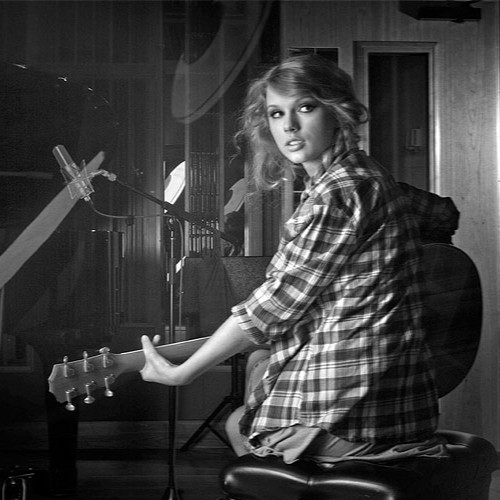
Taylor worked on Speak Now for two years. Because of her extensive touring schedule, she wrote the album alone, as she often didn’t have time to schedule co-writing sessions with other collaborators. “I’d get my best ideas at 3:00 a.m. in Arkansas, and I didn’t have a co-writer around so I would just finish it. That would happen again in New York and then again in Boston and that would happen again in Nashville.” At the time, that was only part of the truth. Taylor wasn’t yet ready to frame the process as a statement of intent, or to position it as a response to criticism. Instead, she explained it as convenience: the songs simply ended up being written that way. To keep the album coherent, she played the songs to her family, friends, and producer Nathan Chapman to gauge their reactions. Speaking on a live webcast on July 20, 2010, she said:

«Writing every song by myself on this album is something I’m really stoked about. I’m really excited that the project came together the way that it did. It wasn’t that I had some major gameplay plan, starting out making this album like, ‘This is going to be the album that I’m gonna write by myself.’ It was really sort of accidental. The songs that I was the most proud of were the ones that I had written by myself. And so that became the album.»

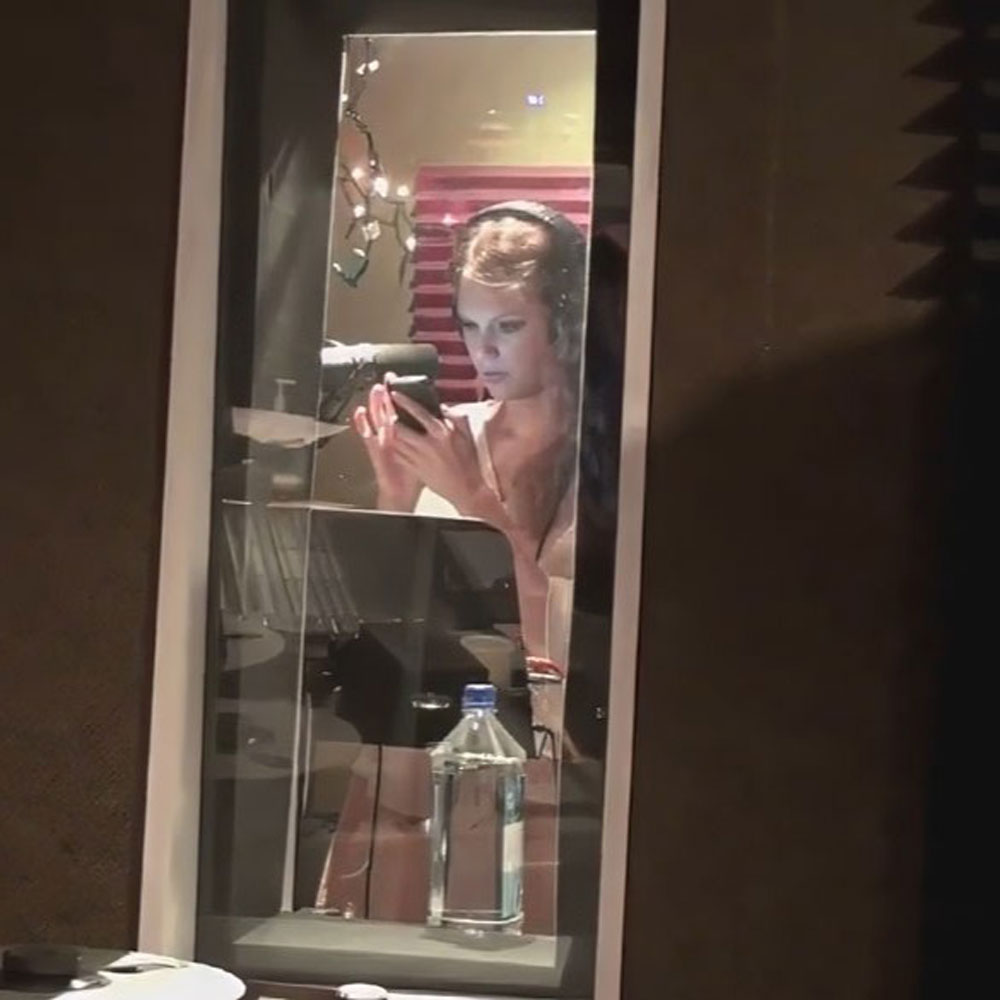
Taylor wrote as many as 25 songs, and by early 2010 began refining the track list. Whenever she had a few days off tour, she would fly to Nashville to record with Nathan Chapman, who had worked with her since her debut album, Taylor Swift (2006). Even though the success of Fearless allowed for more producers this time, Taylor chose to work solely with Nathan, trusting their established chemistry. As he later said, her co-production credit was “not a vanity credit. We were really a team, very collaborative.”

The first track Nathan produced for Taylor on Speak Now was “Mine,” recorded within five hours. Taylor would record live vocals and play guitar for the initial take, while Nathan added instrumentation and background elements for a first demo. After the demos were arranged, other engineers and musicians came in to replace programmed drums with live ones and add acoustic instruments such as fiddle. For some tracks, including “Back to December,” Taylor and her team recorded string orchestration at Capitol Studios in Los Angeles. They finished recording by June 2010, with “The Story of Us” emerging as the moment Taylor felt she had fully realized what she set out to achieve with the album.

After recording wrapped, Justin Niebank mixed the album on Pro Tools at Nashville’s Blackbird Studio, completing 17 tracks in only three weeks, including 14 on the standard edition and three bonus tracks on the deluxe edition.

Making of
Taylor Swift for Speak Now (2010)
Taylor Swift for Speak Now (Joseph Anthony Baker, 2010)

Lyrical Themes​

Speak Now is a transitional album in which Taylor exists between two worlds—still rooted in the emotional immediacy of adolescence, yet beginning to step into a more reflective adulthood. It is especially striking as a writerly record, often favoring narrative detail and specificity over pure hook-driven structure, while still delivering plenty of memorable choruses. In many ways, the message dictates the mood: each song unfolds according to the emotion it is trying to capture, rather than a fixed pop formula. Continuing her established songwriting approach, Taylor leans into emotional precision, treating her lyrics as “diary entries” that helped her process and navigate the complexity of relationships and growing up. She remembers the look on her ex-boyfriend’s face “at 1:58,” how she ran off the plane and into his arm “that July 9th.” It’s devastating, diaristic and poetic. When speaking to ET Canada in 2010, she said:

«These songs are made up of words I didn’t say when the moment was right in front of me. These songs are open letters. Each is written with a specific person in mind, telling them what I meant to tell them in person.»

The lyrical world of Speak Now is built around confession, timing, and the things left unsaid. Many of the songs are shaped by confrontation—sometimes direct, sometimes imagined—as Taylor revisits moments that remain unresolved. Across the album, she returns to situations where emotions were too immediate, too tangled, or too late to express in the moment, using the songs as a way to finally articulate what had been building beneath the surface, whether that is young love, misunderstanding, or regret.

Broadly, the album’s songs fall into two emotional registers: those carried by romantic intensity, bright possibility, and soaring momentum, and those that are downtrodden, and world-weary, and lovesick. The former ended up accounting for the most popular singles from the album, like “Sparks Fly,” and they are also the songs that have the most in common with Taylor’s work prior, but even they are shaped by hindsight, often circling back to moments where a different choice might have altered the outcome. In contrast, the more subdued songs like “Last Kiss” or “Never Grow Up” lean into introspection with a growing awareness of consequence and change.

Ultimately, Speak Now is a preternaturally mature record that finds Taylor grappling with new changes in her life. By now, she had achieved fame and experienced both its advantages and pitfalls. The entire album is tied together by a sense of not knowing where to go once she’s gotten everything she wanted.

Composition

The musical landscape of Speak Now builds on the foundation of Taylor’s earlier work, but expands it in scale, texture, and ambition. At its core, the album remains rooted in country-pop, with acoustic guitar as its backbone, yet it frequently stretches beyond those boundaries—incorporating elements of pop rock, power ballads, and orchestral arrangements. The result is a sound that feels both familiar and more expansive, mirroring the emotional range of the songwriting.
Much of the album’s cohesion comes from Taylor’s close collaboration with producer Nathan Chapman, whose approach balances clarity with subtle complexity. The production often begins with stripped-back foundations—live vocals and guitar—before gradually building into fuller arrangements. In the documentary Taylor Swift: Speak Now, Taylor said:

«Most of the songs I write start out with just me and my guitar. So, recording this album with Nathan Chapman, my co-producer, we started every track from the ground up. We'd do guitar and vocal and then add things as it felt right. And honestly, we made this album in a basement, let's just be honest about it.»

Across the album, there is a noticeable emphasis on live instrumentation and organic sound, even as the arrangements grow more layered. Acoustic instrumentation such as banjo, fiddle, and mandolin anchors the record in its country origins, while electric guitars, layered backing vocals, and dynamic drum patterns push many of the songs toward a more polished, crossover sound.

Because Taylor envisioned Speak Now as a form of direct communication with her audience, mixer Justin Niebank incorporated monoaural reverberation inspired by 1950s and 1960s recordings, creating a subtle vintage quality that adds warmth and immediacy. The record prioritizes a band-oriented feel, giving the songs a sense of immediacy and authenticity. This balance—between intimacy and scale, tradition and expansion—defines Speak Now sonically, capturing an artist in the process of pushing against the boundaries of the sound that first brought her success.

Mine
“Mine” tells the story of a lasting love that overcomes past fears and insecurities, envisioning a stable future together.

Mean

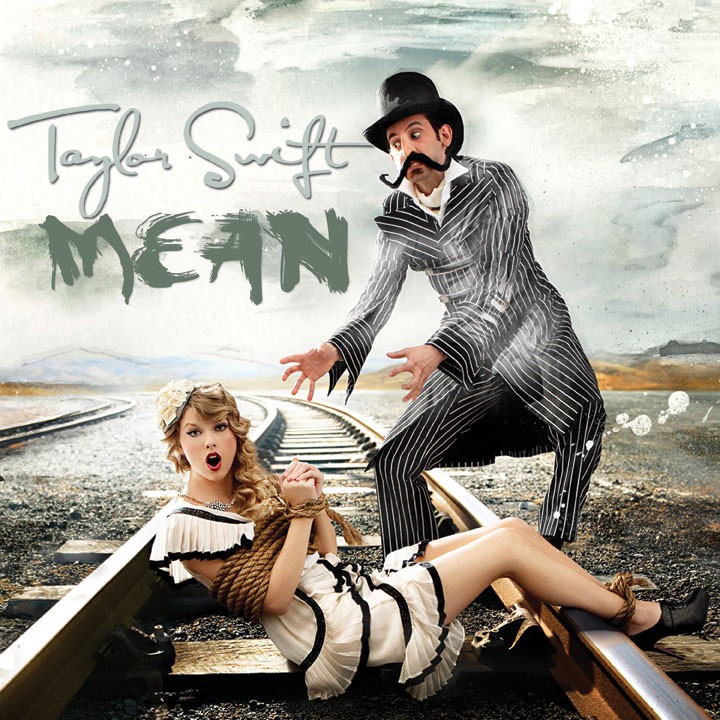
“Mean” is about overcoming bullying by turning hurt into resilience and rising above those who try to bring you down.

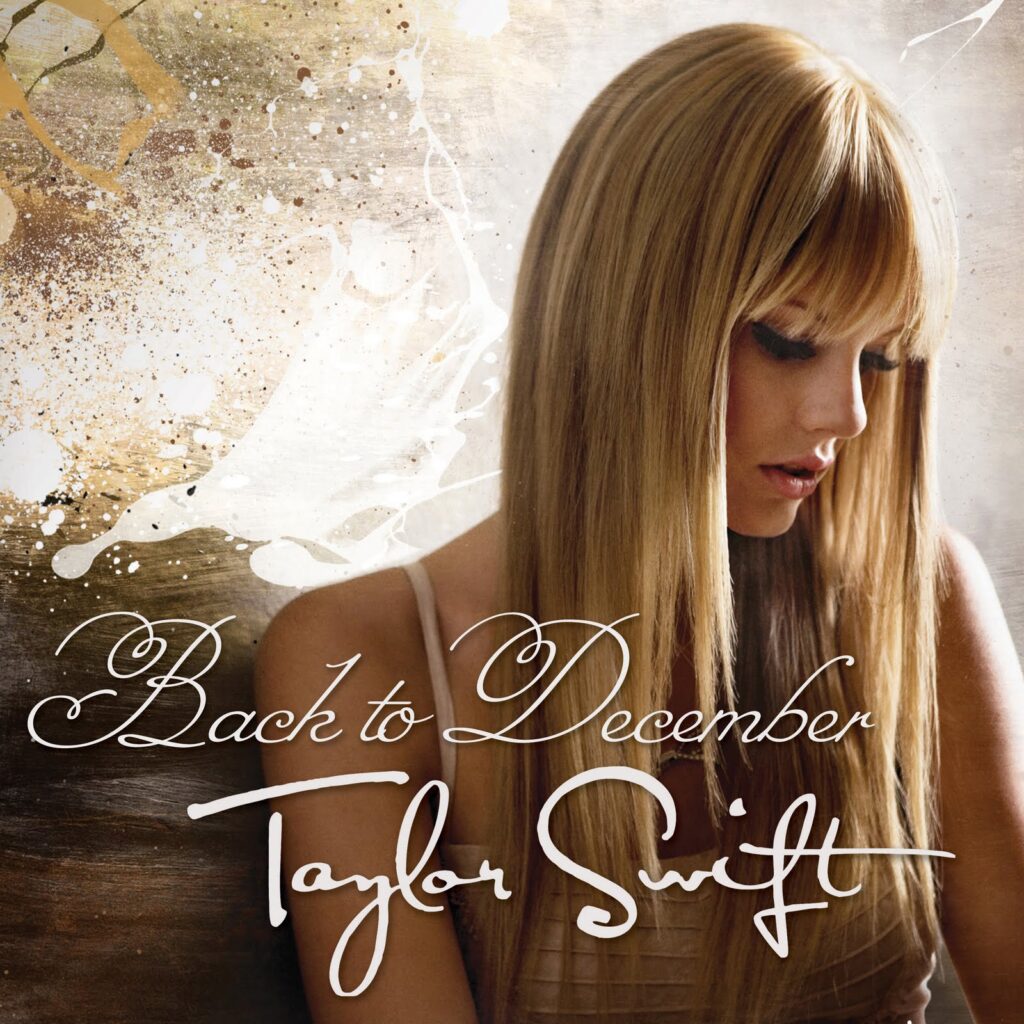
Back to December

“Back to December” is an apology, reflecting on longing to undo the hurt Taylor caused in a past relationship.
Taylor Swift for Speak Now (2010)
Taylor Swift for Speak Now (Joseph Anthony Baker, 2010)

Art Direction

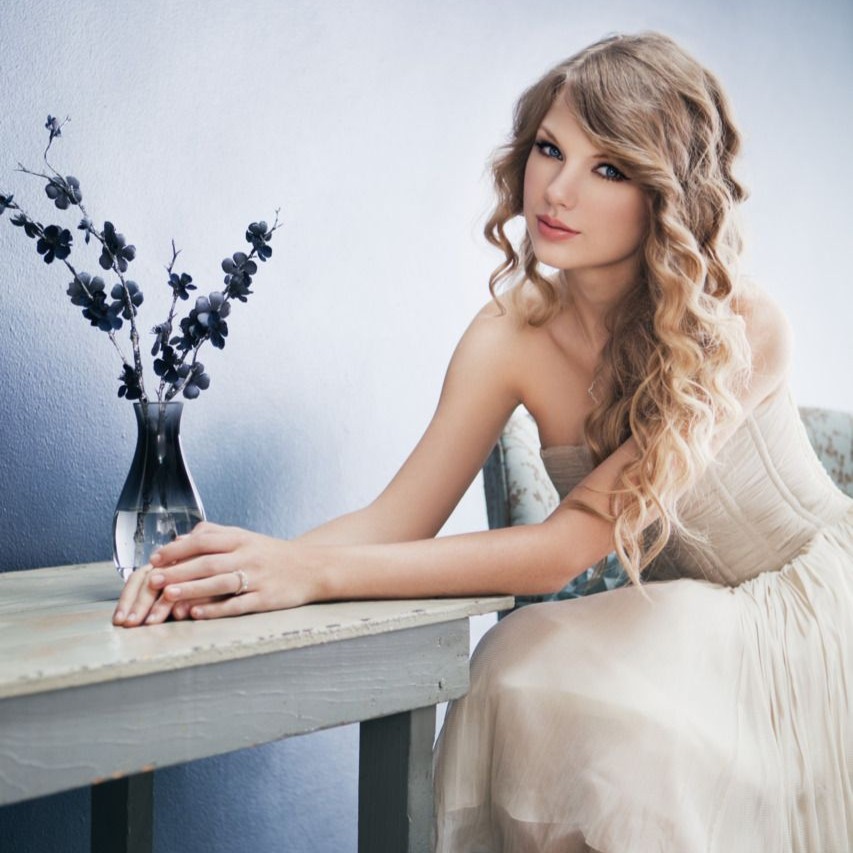
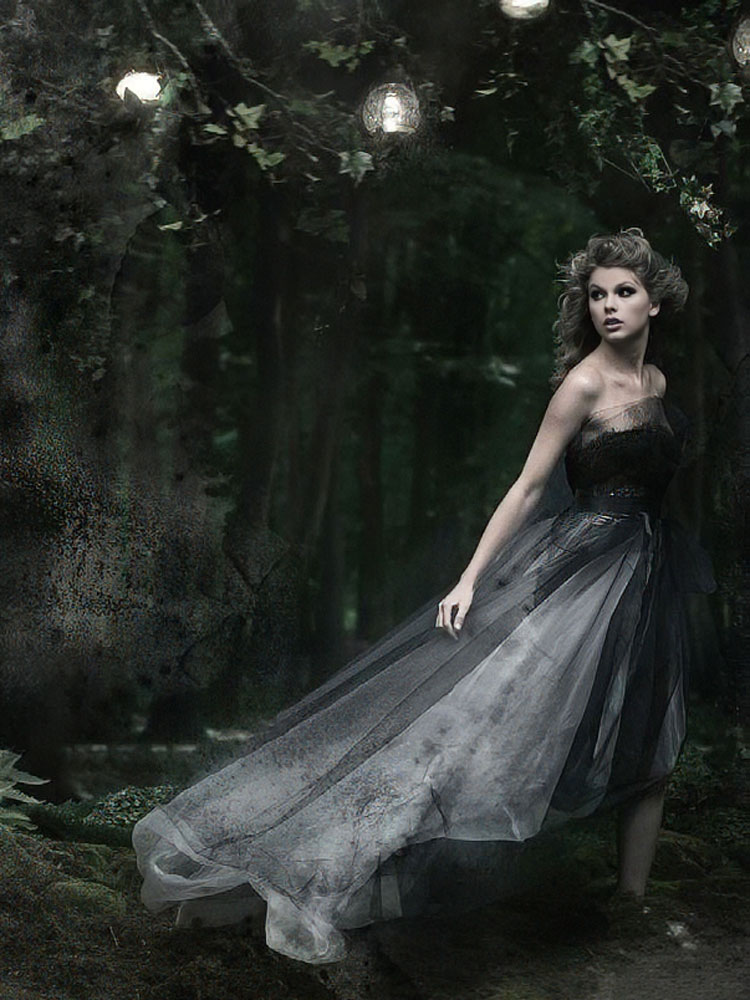
As with Fearless, the Speak Now photoshoot was captured by Joseph Anthony Baker in and around Nashville over the course of two days in the summer of 2010. The images combine carefully staged studio setups with on-location scenes, including a chapel and Nashville’s Two Rivers Mansion, blending portraiture with narrative environments. Almost every song is paired with a setting that visually reflects its narrative, extending the album’s storytelling beyond the music itself. As Taylor explained in a behind-the-scenes video:

«The fact that all the pictures stem from lyrics that I’ve written is so much fun! It’s so much fun to get pictures to the little storybook that you wrote. […] I felt like we need an album where when you flip through the CD booklet you gotta see these portraits of how the songs look in my head.»

Taylor is placed at the center of the imagery, most notably in the cover art where she appears in a flowing purple gown against a softly textured backdrop, evoking a sense of theatrical stillness rather than spectacle. The dominant purple palette became a defining visual marker of the era, reinforcing themes of fantasy, confession, and emotional immediacy.

After the shoot, the studio images were further refined by Filtre Studio into cinematic, painterly portraits. A distinctive oil-painting effect is layered over several of the visuals, including the cover itself, giving the imagery a storybook quality, with gold frames and soft textures reinforcing the album’s whimsical, romanticized tone.

Speak Now Photoshoot

Taylor Swift for Speak Now (2010)
Taylor Swift for Speak Now (Joseph Anthony Baker, 2010)

Release and Promotion

For further information and the documentary on release week, see Taylor Swift: Speak Now.
At the time of Speak Now’s release, Taylor’s promotional strategy stood in stark contrast to what was typical for a country artist. Country marketing in the early 2010s was still largely rooted in radio-driven exposure, genre-specific television appearances, and relatively traditional album cycles, with far less emphasis on global rollout strategies or multi-platform digital storytelling.

At this stage in her career, however, Taylor was already operating on a different scale. After she unveiled Speak Now on July 20, 2010, through a live stream on Ustream, a carefully orchestrated rollout that balanced traditional promotion with direct fan engagement was put into action. Just weeks later, the lead single “Mine” was released to country radio and digital platforms, quickly becoming a major success—peaking at No. 3 on the Billboard Hot 100, while also charting strongly internationally. As anticipation built, Taylor revealed the album’s now-iconic cover art on August 18, featuring her twirling in a deep-purple gown, followed by the announcement of a Target-exclusive deluxe edition with alternate visuals and expanded content.

In the weeks leading up to release, Taylor kept momentum high with a countdown campaign on iTunes, dropping one new track per week and offering fans early glimpses into the album’s emotional range—from the title track to “Back to December” and “Mean.” This sense of momentum carried into release week itself, which was carefully mapped out with a full promotional schedule spanning major television appearances, interviews, and fan-focused events in New York City and Los Angeles. The excitement of release week was captured in both a physical booklet and a Thanksgiving special on NBC titled Taylor Swift: Speak Now. On release day, Taylor said:

«So, when you release a new album it's the culmination of years of hard work in the studio. And I've come to find that at some point you end up in New York doing all kinds of millions of media things. At times, it can be complete chaos, which is a good thing!»

Even more unusual was the breadth of her commercial and media integration: major brand partnerships with companies like Starbucks, Sony, and Walmart amplified the album’s visibility, while Taylor expanded her brand into new territory with the launch of her fragrance Wonderstruck, inspired by lyrics from “Enchanted.”

Her tightly choreographed promo schedule was also that of a global pop superstar rather than a Nashville artist. Taylor appeared across major television platforms, performed at high-profile award shows like the MTV Video Music Awards or the Grammys, and engaged in international press and promotional tours spanning Europe and Asia. From intimate fan experiences to large-scale media appearances, she maintained a strong personal connection with her audience while expanding her global reach. In retrospect, Speak Now demonstrated how Taylor was already beginning to outgrow the traditional country promotional model, effectively bridging into the fully global, multimedia rollout strategies that would define her later career.

Album Artwork

Taylor Swift for Speak Now (2010)
Taylor Swift for Speak Now (Joseph Anthony Baker, 2010)

Critical Reception

Initial reviews of Speak Now were generally positive, though there were disagreements over its genre classification, with critics categorizing it as country rock, pop rock, and power pop. Taken together, critics largely agreed that the record marked a noticeable step forward in Taylor’s songwriting, particularly in its more mature approach to love, relationships, and emotional storytelling. Publications including AllMusic, Entertainment Weekly, The Guardian, the Los Angeles Times, and Rolling Stone highlighted the strength of her narrative detail and vivid, character-driven writing. As Stephen Thomas Erlewine of AllMusic put it, she writes “from the perspective of the moment yet has the skill of a songwriter beyond her years.”

At the same time, reactions to the album’s more dramatic emotional territory were mixed. Some critics felt that its themes of heartbreak, anger, and retaliation occasionally overshadowed its cohesion, with a few describing certain tracks as uneven or overly tied to celebrity-driven narratives. Others, however, saw that intensity as part of its appeal, noting that even its most confrontational songs revealed a sharper, more compelling edge to her songwriting. Reviews in outlets like Spin and The A.V. Club pointed out that the more aggressive or “vengeful” tracks, in particular, often stood out for their energy and personality, even when they divided opinion lyrically. Attention also turned to the album’s production and structure. While many praised its polished, radio-ready sound and crossover appeal, some critics felt the overall production leaned too safe or uniform, especially given its lengthy tracklist. Others were more receptive to its stylistic range, appreciating its experiments with pop, rock, and softer introspective moments, even if not all of them landed equally.

Across these perspectives, Speak Now was often framed as a transitional work—imperfect in places, but ambitious in scope, and notable for how it expanded Taylor’s artistic identity beyond the expectations of her earlier country-pop era.

Hidden Messages

Hidden throughout Speak Now are cryptic messages embedded in the album’s lyric booklets, a continuation of a tradition Taylor had already begun on earlier releases. Each song contains an acrostic-style phrase formed from capitalized letters, offering additional context, commentary, or emotional subtext tied to the track itself.
Taylor Swift for Speak Now (2010)
Taylor Swift for Speak Now (Joseph Anthony Baker, 2010)

Commercial Performance

Ahead of release, Big Machine shipped two million copies of Speak Now to US retailers—an early sign of the scale the album was expected to reach. In the week ending November 13, 2010, it debuted at No. 1 on the Billboard 200 with 1,047,000 first-week sales, marking the highest single-week total ever for a female country artist at the time. In her “Entertainer of the Year 2010” interview with Entertainment Weekly, Taylor recalled how she found out about the number:

«I got a call, and it was a bunch of people from management and my mom and my dad on the phone. I remember Scott Borchetta, my record-label president, saying, 'Congratulations. I guess you’re my million-dollar baby.' I made him say it, like, four times because I couldn’t actually believe it. First I was screaming, and then I was really silent, and then I was really emotional, and then I was dancing. I still can’t wrap my mind around it.»

Coverage from outlets including Billboard, MTV, and The New York Times framed the moment against a shifting industry landscape, where album sales were rapidly declining due to digital downloads. As The New York Times noted, despite a broader market that had “plunged by more than 50 percent in the last decade,” the album underscored that Taylor had already moved beyond genre boundaries into mainstream pop stardom. The same year, Guinness World Records recognized Speak Now as the fastest-selling album in US history by a female country artist.

Its chart performance extended far beyond the lead single. In its first week, 11 of the 14 standard edition tracks entered the Billboard Hot 100, making Taylor the first female artist to place 11 songs on the chart simultaneously. Following the release of the deluxe edition tracks in 2011, “If This Was a Movie” reached No. 10, making her the first artist to achieve eight Top 10 debuts on the Hot 100. In total, the album produced four Top 10 hits—“Mine,” “Back to December,” “Speak Now,” and “If This Was a Movie”—and spent six non-consecutive weeks at No. 1 on the Billboard 200.

Internationally, Speak Now mirrored this momentum, topping the album charts in Australia, Canada, and New Zealand, and reaching the Top 10 in markets including the United Kingdom and Ireland. It earned multi-platinum certifications across several territories and sold hundreds of thousands of copies in Asia during the “Speak Now World Tour” (2011-2012), receiving platinum status in countries such as Taiwan, South Korea, Indonesia, and the Philippines. Years later, the album experienced a renewed chart presence during “The Eras Tour” (2023-2024), re-entering the UK Top 40 for the first time in over a decade—underscoring its lasting commercial and cultural footprint.

Accolades

In hindsight, the awards landscape around Speak Now is often viewed through the long shadow cast by Fearless, which had swept major categories only a year earlier and effectively reset expectations for what Taylor’s next chapter would “need” to achieve. Still, Speak Now carved out a notably strong awards run across both industry recognition and mainstream popularity metrics.
Within the country music industry, the album was repeatedly acknowledged at the highest level, earning nominations for “Album of the Year” at the Academy of Country Music Awards in 2011, the American Country Awards in 2010, and the Country Music Association Awards in 2011. Its most significant industry triumph came at the CMA Awards, where Taylor won “Entertainer of the Year” for a second time, having first received the honor in 2009—an especially striking achievement given her age and the genre’s history.

At the 54th Annual Grammy Awards, Speak Now was nominated for “Best Country Album,” while “Mean” won both “Best Country Solo Performance” and “Best Country Song,” further cementing its critical standing within the genre’s traditional institutions. In parallel, the album also performed strongly in broader, more mainstream award spaces that tracked commercial success and cross-genre reach. At the Billboard Music Awards in 2011, it was nominated for “Top Billboard 200 Album” and won “Top Country Album,” while at the American Music Awards in 2011 it took home “Favorite Album (Country).” That year, Taylor was also named Billbaord‘s “Woman of the Year.” Accepting the award, she said:

«The first time I ever saw my name on the Billboard charts, I was sixteen. I was on radio tour and I was in a rental car, going to three or four different stations a day, homeschooling in the back seat. And that seems like forever ago, thanks to so many people, but mostly my family and everyone who helped me get here. My fans! I love you so much! I am so humbled.»

Speak Now‘s reputation only grew in the years that followed. In 2012, Rolling Stone included it at No. 45 on its list of “The 50 Greatest Female Albums of All Time,” with Rob Sheffield noting that while it may have been played on country radio, Taylor was already operating like “one of the few genuine rock stars we’ve got these days,” backed by an instinctive sense for songwriting precision. By the end of the decade, the album’s standing had become even more defined. Billboard ranked it No. 51 on its list of the best albums of the 2010s and No. 2 among country albums of the same decade, while Spin placed it at No. 37 and other outlets such as Taste of Country similarly highlighted its lasting impact within the genre. Years later, Rolling Stone positioned it at No. 196 on its list of “The 250 Greatest Albums of the 21st Century So Far,” describing it as the peak of Taylor’s Nashville era.

Sparks Fly

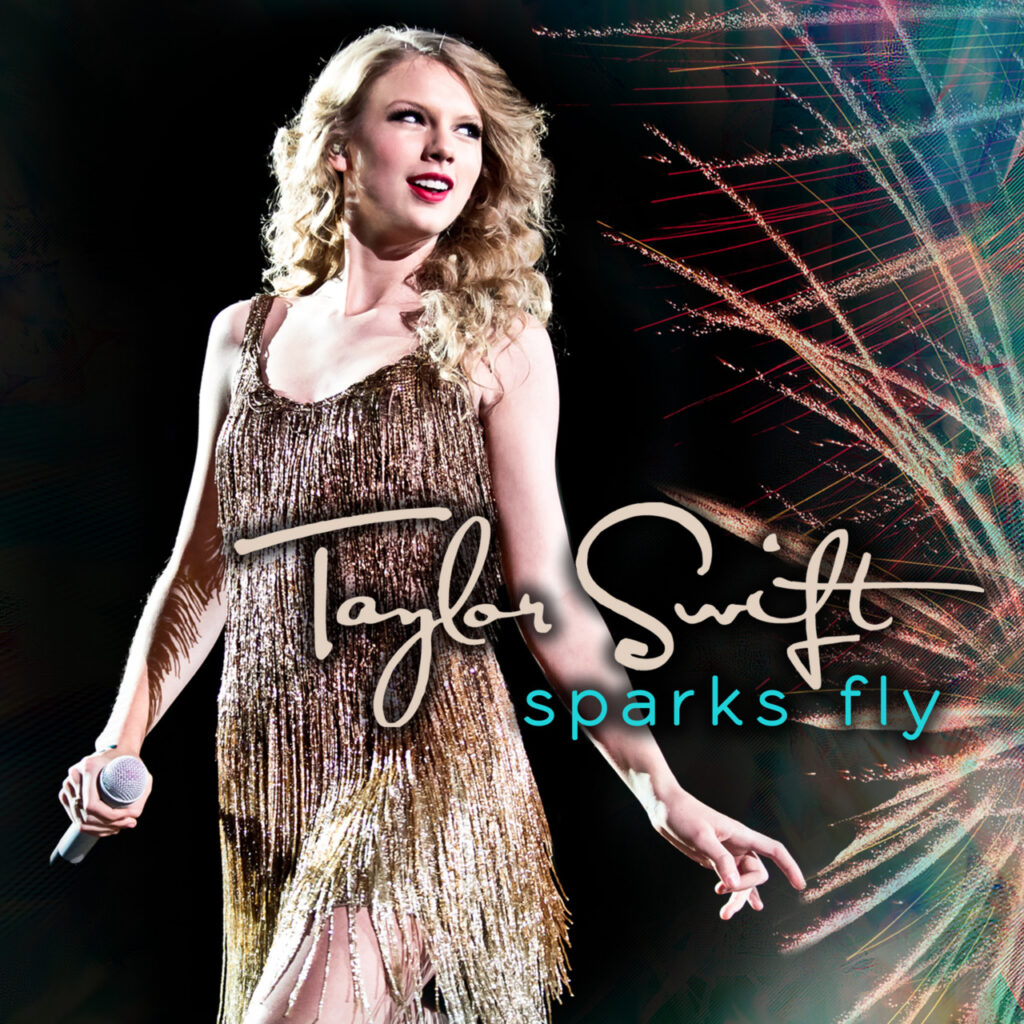
“Sparks Fly” captures the thrill of intense attraction and an all-consuming romance that feels both exciting and reckless.

The Story of Us

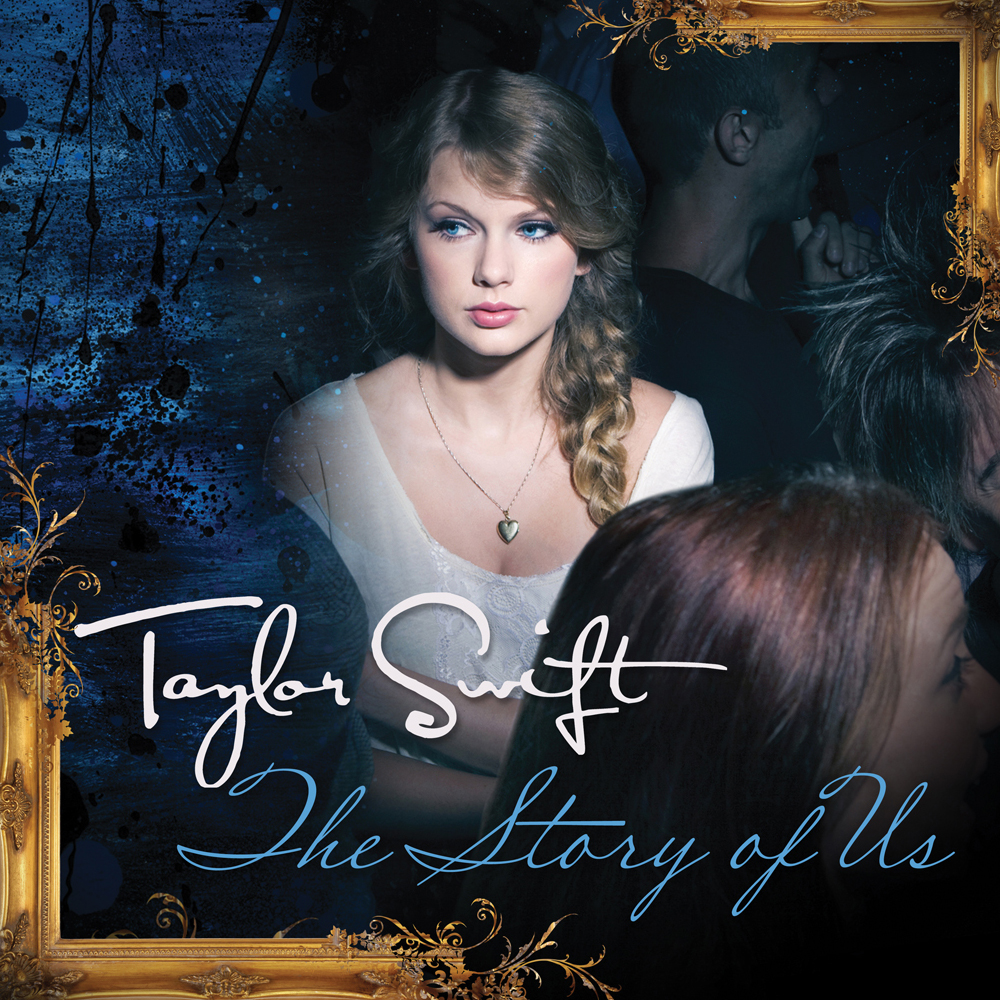
“The Story of Us” reflects on a broken relationship, leaving both people feeling like strangers after a once-promising love.

Ours

“Ours” is about choosing love despite outside judgment, believing a relationship belongs only to the two people in it.
Taylor Swift for Speak Now (2010)
Taylor Swift for Speak Now (Joseph Anthony Baker, 2010)

Impact and Legacy

Speak Now is the last time Taylor was primarily regarded as a country musician, even as her chart dominance increasingly placed her in pop’s highest echelons. The album finds her suspended between these two worlds, using that in-between space to search for perspective, empathy, and self-definition. Much of the record feels like her writing from a place of unusual clarity—seeing with a maturity that often reaches beyond her years, while still circling back to moments of her childhood, longing for simpler times. As she wrote in the album’s prologue:

«Real life is a funny thing, you know. In real life, saying the right thing at the right moment is beyond crucial. So crucial, in fact, the most of us start to hesitate, for fear of saying the wrong thing at the wrong time. But lately what I’ve begun to fear more than that is letting the moment pass without saying anything. [...] There is a time for silence. There is a time waiting your turn. But if you know how you feel, and you so clearly know what you need to say, you’ll know it. I don’t think you should wait. I think you should speak now.»

In the years since its release, Speak Now has been widely discussed in academic and critical contexts as a defining statement of authorship. The album helped solidify Taylor’s credentials as a fully self-sufficient songwriter. Retrospective reviews have highlighted its detailed observations of young adulthood, fame, and emotional confrontation as an early foundation for the narrative sophistication of her later albums. At the same time, its success played a key role in expanding her identity beyond country music and into mainstream pop stardom.

Several critics have also situated Speak Now within the broader construction of Taylor’s public persona. Many of its songs draw directly from experiences that were heavily documented in the media, from short-lived relationships to the 2009 MTV Awards incident, setting a precedent not only for the confessional nature of her later work, but also for the intense public speculation surrounding its subjects.

Taken together, Speak Now stands as both a culmination and a threshold: the final chapter of Taylor’s country-defined identity, and the beginning of a broader, more contested public and artistic presence.

Frequently Asked Questions

What inspired Taylor Swift to create Speak Now?
Taylor Swift created Speak Now as a fully self-written response to doubts about her songwriting ability. She also drew inspiration from the emotional experiences of her late teenage years, using the album to revisit unresolved moments, confront public narratives about her life, and document her transition into adulthood.
Speak Now differs from Taylor Swift’s previous albums in that it was written entirely by Taylor alone, without co-writers, making it a more direct statement of authorship than either Taylor Swift (2006) or Fearless (2008). It also shows a shift toward more narrative-driven, confessional songwriting that balances country-pop foundations with greater emotional confrontation and a clearer sense of artistic transition into adulthood.
Speak Now explores themes of confession, regret, and unresolved emotion, often centered on moments where things were left unsaid or happened too quickly to fully process. It also reflects on young adulthood, fame, and shifting relationships, balancing romantic idealism with hindsight and growing self-awareness.
Speak Now received praise for Taylor Swift’s narrative songwriting, emotional detail, and artistic growth. Commercially, it was a major success, debuting at No. 1 on the Billboard 200, selling over one million copies in its first week in the United States, and achieving multi-platinum status worldwide while producing several hit singles and strong chart performance across multiple countries.
Speak Now marked a key turning point in Taylor Swift’s career by solidifying her reputation as a fully self-sufficient songwriter and strengthening her artistic credibility beyond her earlier country-pop success. Its commercial dominance and crossover impact also pushed her further into mainstream pop territory, laying the groundwork for her transition into a global pop star.
Taylor Swift Switzerland Logo (2025)
Privacy Overview

This website uses cookies so that we can provide you with the best user experience possible. Cookie information is stored in your browser and performs functions such as recognising you when you return to our website and helping our team to understand which sections of the website you find most interesting and useful.